
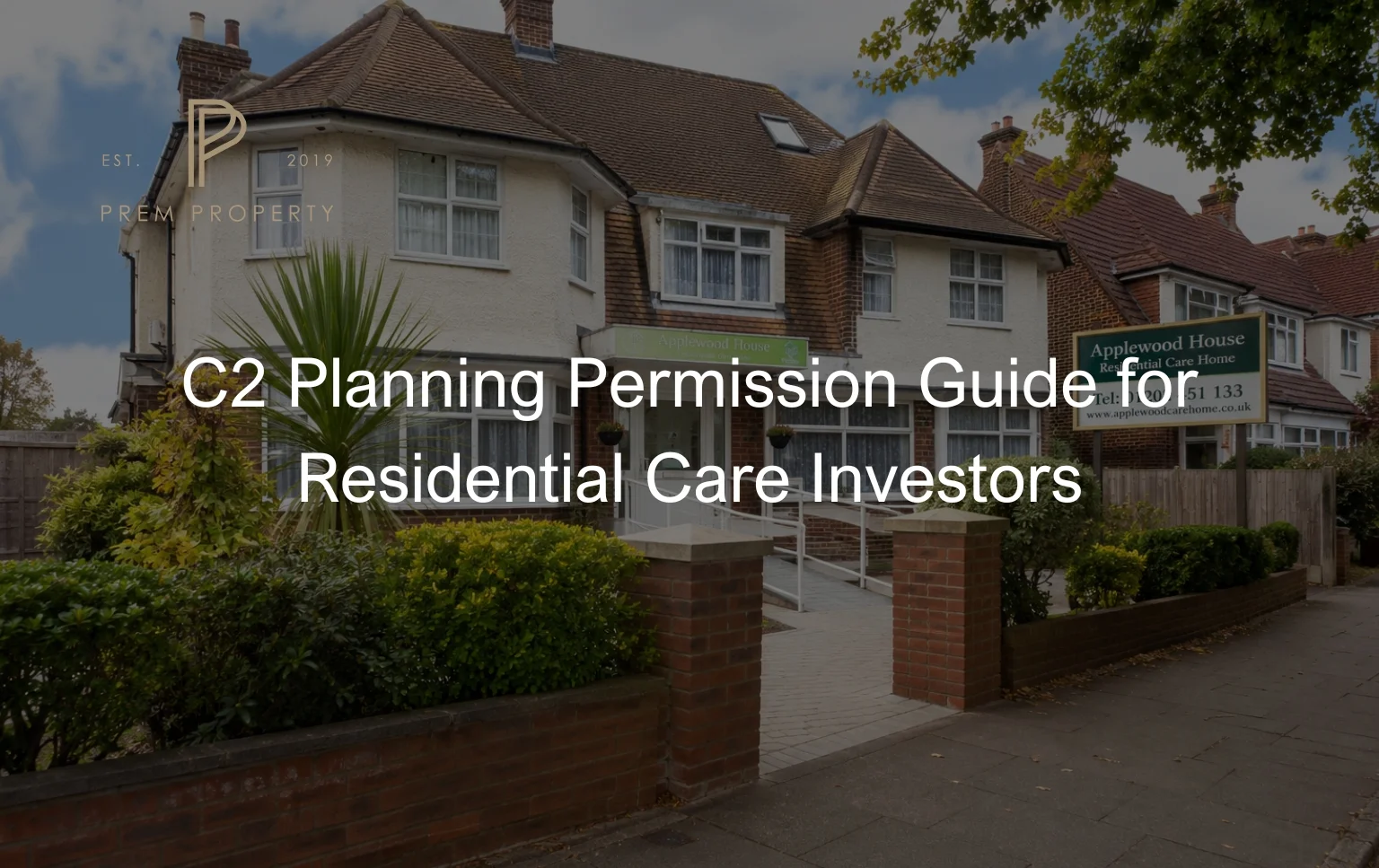
C2 planning permission is the designation used in England and Wales for residential institutions, including care homes, children’s homes, and boarding schools. If you are converting a standard residential property into a children’s home or care facility, you will almost certainly need to change its use class to C2 before you can legally operate.
Key Takeaways
- C2 planning permission covers residential institutions such as children’s homes, care homes, and nursing homes in England and Wales.
- Converting a family home (Use Class C3) to a children’s home typically requires a formal change of use application to C2.
- Local planning authorities assess applications on a case-by-case basis, weighing community impact, traffic, and neighbourhood character.
- Ofsted registration and planning permission are separate processes but both are legally required to operate a residential children’s home.
- Refusing to apply, or operating without the correct use class, can result in enforcement action, fines, and forced closure.
- C2 planning decisions are often contested, so engaging a planning consultant early saves significant time and money.
What C2 Use Class Actually Covers
The Use Classes Order in England, which was most recently updated in 2020 under the Town and Country Planning (Use Classes) Order 1987, organises land and buildings into categories based on their function. C2 sits within the residential branch of those categories, but it is fundamentally different from the C3 class that covers ordinary dwellings.
Here is a breakdown of how the residential use classes compare:
| Use Class | Description | Typical Examples |
|---|---|---|
| C1 | Hotels and guest houses | Hotels, B&Bs, hostels |
| C2 | Residential institutions | Care homes, children’s homes, nursing homes, boarding schools |
| C2A | Secure residential institutions | Prisons, secure training centres |
| C3 | Dwellinghouses | Single-family homes, flats |
| C4 | Houses in multiple occupation | HMOs with 3-6 resident |
What distinguishes C2 from C3 is the level of institutional care and supervision provided. A property in C2 is not simply a shared house. It is a managed, staffed environment where residents receive services as part of their daily living arrangement. That distinction matters enormously to local planning authorities when they are assessing applications.
Why You Cannot Simply Move In and Start Operating
One of the most common and costly mistakes that new investors make is assuming that because a property looks like a family home, it can be used as one commercially. That assumption is wrong, and the consequences of getting it wrong are serious.
Operating a children’s home from a C3-class property without obtaining C2 planning permission is a breach of planning control. Local authorities have the power to issue Enforcement Notices requiring you to cease the use and potentially restore the property to its original condition. This can unravel months of work, significant capital expenditure, and your relationship with prospective commissioning bodies.
The Planning Portal guidance on use classes makes clear that moving from C3 to C2 is a material change of use and therefore requires planning permission in most cases. There are some limited exceptions where permitted development rights apply, but these are not standard and should never be assumed without professional advice.
If you are building out your understanding of this sector, the blogs at Prem Property cover a wide range of topics relevant to property investors entering the children’s residential care space.
How to Apply for C2 Planning Permission
Applying for C2 planning permission follows the same general process as any other planning application in England, but the nuances around children’s homes and care settings mean that the supporting documentation needs to be particularly thorough.
Here is the typical process:
- Pre-application consultation: Contact your local planning authority (LPA) before submitting. Many councils offer a paid pre-application service where a planning officer reviews your proposal informally and flags likely issues.
- Site appraisal: Assess the property and surrounding area for suitability. Is it near schools? Is parking adequate? Are there neighbouring residents who may object?
- Planning statement: Prepare a detailed statement explaining the proposed use, the number of residents, staffing levels, and how the property meets local plan policies.
- Design and access statement: Required for most applications, this outlines any physical changes to the building and how accessibility has been considered.
- Supporting documents: These may include a transport assessment, noise impact report, or fire risk assessment depending on the property and council requirements.
- Submit via the Planning Portal: Applications are submitted online, with a fee currently set at £234 for a change of use application in England (as of 2024).
- Determination period: The LPA has eight weeks to determine a standard application, though complex or contested cases frequently take longer.
Good rental property management processes also require you to keep planning documents current and accessible, particularly if you are managing a portfolio that includes specialist residential properties.

What Local Authorities Actually Look For
Understanding how planning officers think when they assess a C2 application helps you write a stronger planning statement and anticipate objections before they arise.
Planning officers will weigh up a number of material planning considerations, including:
- Character of the area: Will the proposed use be out of keeping with the surrounding neighbourhood?
- Impact on neighbouring properties: Noise, vehicle movements, and activity at unsociable hours are frequently raised concerns.
- Parking and highways: Children’s homes often have staff shifts, visitor access, and vehicle drop-offs. Highways officers will want to see that this is manageable.
- Concentration of similar uses: Some councils have adopted policies to prevent an over-concentration of care homes or supported living facilities in particular streets or wards.
- Suitability of the building: Is the property large enough? Are there enough bathrooms, bedrooms, and communal spaces to meet regulatory standards?
The National Planning Policy Framework, available via GOV.UK’s NPPF guidance, does not specifically address children’s homes but provides the policy backdrop against which all applications are assessed. Local development plans will often contain more specific policies relating to residential care uses.
Understanding childrens home regulations is equally important at this stage, because planning officers increasingly expect applicants to demonstrate that the intended use will meet regulatory standards before they approve a change of use.
C2 Planning and Ofsted Registration: Two Separate Processes
This is a point that catches many investors out. Planning permission and Ofsted registration operate under completely separate legislative frameworks and are handled by entirely different bodies. You need both, and neither automatically grants the other.
Planning permission is granted by the local planning authority under planning law. Ofsted registration is required under the Care Standards Act 2000 and the Children’s Homes (England) Regulations 2015. You can have a property with C2 planning permission that Ofsted refuses to register, and vice versa.
The Ofsted children’s homes regulations, inspections and what investors need to know resource provides a useful breakdown of what the registration process involves and how it sits alongside your planning obligations.
For a broader perspective on entering this sector as an investor, the article on residential childrens homes a guide for investors is worth reading alongside the planning guidance in this article.

Fire Safety and Physical Standards Within C2 Properties
Getting C2 planning permission does not mean the physical work is finished. Before a children’s home can open, the building itself must meet a range of safety standards that go significantly beyond what is required for an ordinary dwelling.
Fire safety is one of the most scrutinised areas. The Regulatory Reform (Fire Safety) Order 2005 applies to the non-domestic parts of C2 properties, and a fire risk assessment must be carried out by a competent person. In practice, this often means installing fire detection systems, emergency lighting, and in some cases sprinkler systems, depending on the size and layout of the building.
For anyone in the early stages of conversion, the guidance on home fire safety provides a solid starting point for understanding what changes might be required before an inspection.
You can also access detailed technical guidance directly from the National Fire Chiefs Council, which publishes specific guidance for residential care environments.
Common Reasons C2 Applications Get Refused
Even well-prepared applications can be refused. Knowing the most common grounds for refusal helps you address them pre-emptively.
- Insufficient parking provision: This is the single most common reason for refusal in residential areas.
- Inadequate separation distances: Councils sometimes require minimum distances between care homes to prevent clustering.
- Overbearing impact on neighbours: If the property is semi-detached or terraced, concerns about noise or overlooking can be decisive.
- Inadequate outdoor space: Regulations for children’s homes often require a defined amount of outdoor space per resident.
- Lack of supporting evidence: Applications submitted without a planning statement, transport assessment, or design and access statement are frequently invalid or refused on process grounds.
The Local Government Association’s planning resources provide context on how different councils approach residential care planning applications.
Things to Know
- Planning permission and building regulations approval are separate. Even after you receive C2 planning permission, structural or layout changes will require a separate building regulations application.
- Permitted development rights were significantly altered in 2020. Do not rely on pre-2020 advice without checking whether the rules still apply to your specific property.
- Some London boroughs and other urban authorities have introduced Article 4 Directions that remove permitted development rights in specific areas, making a formal application mandatory even for changes that would otherwise be permitted.
- A planning appeal is possible if your application is refused, but it adds three to six months to your timeline and is not guaranteed to succeed.
- Prior approval may be available for some institutional conversions in rural areas under specific permitted development classes, but this is a narrow exception.
- Planning conditions attached to a C2 approval can restrict hours of operation, visitor numbers, and staffing levels, so read them carefully before accepting.

Ready to Submit Your C2 Application?
Before you submit a single document, commission a pre-application consultation with your local planning authority. This single step costs between £200 and £500 in most councils and can save you months of delays by identifying show-stopping issues early. Pair that with specialist planning consultancy advice from a firm experienced in residential care applications, and you will be in a significantly stronger position than the majority of first-time applicants in this sector.
Frequently Asked Questions
Q: Does every children’s home in England need C2 planning permission?
In most cases, yes, converting a standard C3 residential property to operate as a children’s home requires a formal change of use to C2.
If the property was previously used as a care home or residential institution, its existing use class may already be C2, and no new application would be needed. However, you should always confirm the existing use class with your local planning authority rather than assuming.
Q: How long does a C2 planning application take to be decided?
The statutory determination period is eight weeks for a standard application, but contested or complex cases regularly take three to four months.
Applications involving children’s homes frequently attract neighbour objections, which can prompt the planning authority to extend the determination period. Engaging a planning consultant early and submitting a complete application first time reduces delays significantly.
Q: Can I operate a children’s home from a property in a conservation area?
Yes, but additional scrutiny applies to any external alterations, and some councils have stricter policies on change of use in conservation areas.
You may need conservation area consent for certain works, and the design and access statement will need to demonstrate that any changes are sympathetic to the character of the area. Pre-application advice from the conservation officer as well as the planning officer is strongly recommended.
Q: What happens if I operate a children’s home without C2 planning permission?
The local planning authority can issue an Enforcement Notice requiring you to stop the use, which can result in financial penalties and forced closure.
In addition to the direct planning consequences, operating without the correct use class can jeopardise your Ofsted registration and damage your relationship with the local authority commissioners who place children with your home.
Q: Is there a fee for applying for C2 planning permission?
As of 2026, the standard flat fee for a Change of Use application in England is £293.
Fees for applications involving new build or significant extensions are calculated differently and can be substantially higher. Wales and Scotland have their own planning fee structures which differ from England, so always check the current fee schedule with the relevant authority before submitting.
The Bottom Line on C2 Planning
C2 planning permission is not a bureaucratic box-ticking exercise. It is a fundamental legal requirement that determines whether your children’s home can operate at all. Getting it right from the outset protects your investment, your reputation with commissioners, and most importantly, the young people who will live in your care.
Start early, take professional advice, and treat the planning process as integral to your business model rather than an afterthought. The investors who succeed in this sector are those who understand the regulatory landscape in full, from planning permission through to Ofsted registration, fire safety, and ongoing compliance. Take that first step by speaking to a planning consultant with direct experience in C2 residential care applications before you commit capital to a conversion project.