
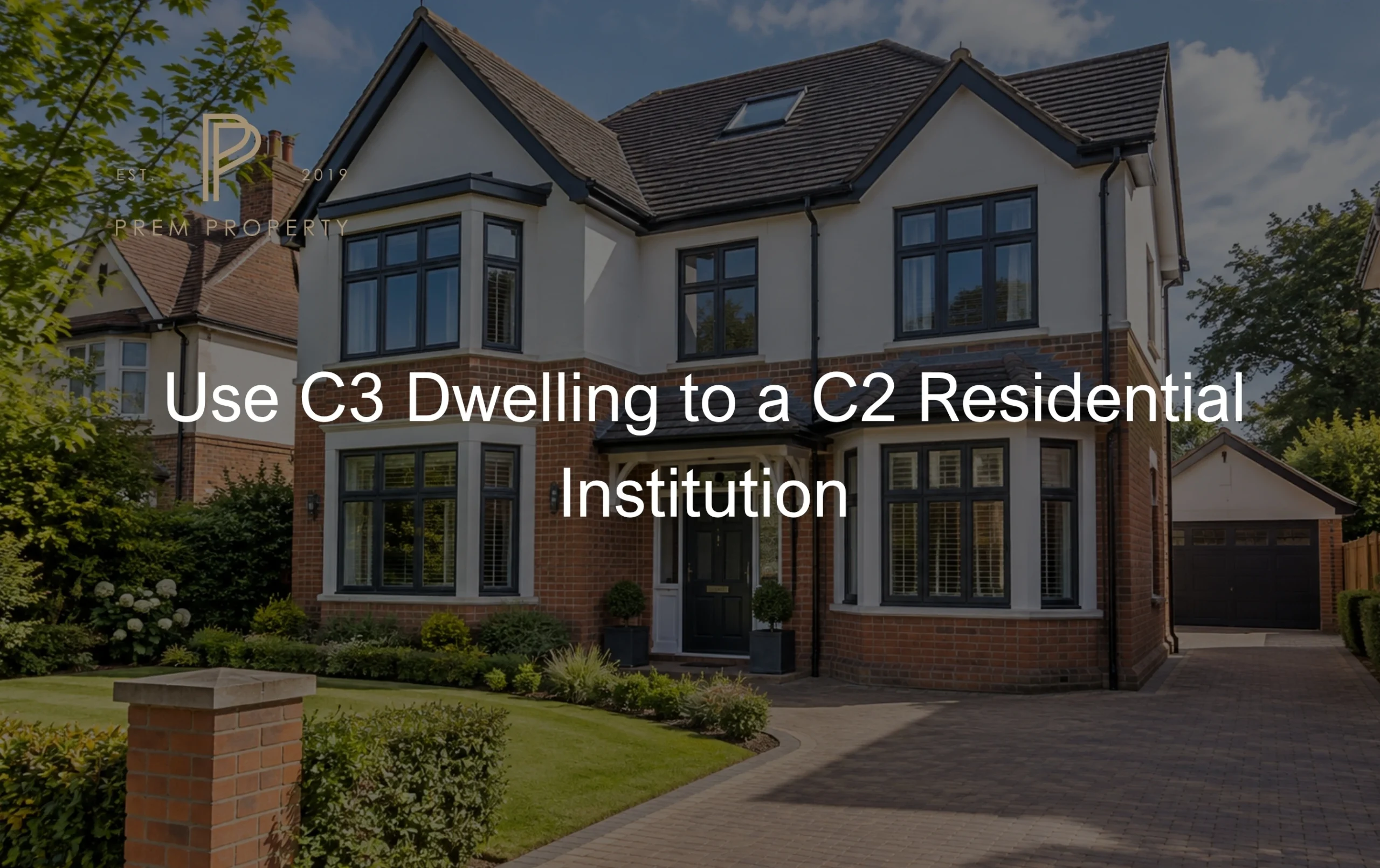
Use C3 dwelling properties can create opportunities for landlords, investors and developers considering specialist housing, but changing a standard residential property to a C2 residential institution requires careful planning. If you are considering using a C3 dwelling for residential care, a children’s home or another specialist residential use, you need to understand the planning position before committing to the project.
The process involves more than simply changing how the property is occupied. You need to establish the property’s existing lawful use, understand the proposed C2 use and determine whether planning permission is required. You may also need to consider building regulations, fire safety, accessibility and the requirements of the intended care or housing provider.
For UK landlords, understanding these requirements early can help you avoid unnecessary costs, delays and problems when using a C3 dwelling for C2 use.
Key Takeaways
- A C3 dwelling is generally an ordinary residential property, while C2 covers residential institutions such as care homes and certain children’s homes.
- If you want to use a C3 dwelling as a C2 residential institution, you first need to establish the property’s existing lawful use and the exact proposed operation.
- A change from C3 to C2 will often require planning permission, but the planning position depends on how the property will actually be used.
- Planning permission and building regulations are separate requirements.
- CQC or Ofsted requirements may also apply depending on the proposed service.
- Property layout, fire safety, accessibility, parking and the impact on neighbours can all affect whether a proposed C2 use is suitable.
- Getting specialist advice before purchasing, refurbishing or leasing the property can help you avoid costly mistakes.
Changing a C3 dwelling to a C2 residential institution can be an attractive opportunity if you own a suitable property and are considering the specialist housing market.
However, it is not simply a case of taking an ordinary house, finding a care provider and changing the way the property is occupied.
The planning position needs to be understood first.
If you own a large family home and a care provider has approached you about using it as a residential care home or children’s home, you need to understand whether the proposed use falls within Class C2 and whether a formal change-of-use application is required.
You also need to consider the physical condition of the building, fire safety, accessibility, building regulations and the requirements of the intended operator.
This is particularly important if you are considering the use of a C3 dwelling for specialist accommodation because the property’s current planning use and its proposed use are not necessarily the same thing.
Prem Property works with landlords, investors, developers and housing providers across the Midlands and Greater London, with experience across C2 residential care, children’s homes, supported living and other specialist housing.
This guide explains what you need to consider before moving from C3 towards C2 use.
What Is a Use C3 Dwelling?
A Use C3 dwelling is generally a property used as a dwellinghouse.
In simple terms, it is an ordinary residential property where people live as their home.
This can include houses and flats used as conventional residential accommodation.
The important point is that planning use relates to how a property is used, not simply what the building looks like.
For example, a large detached house with six bedrooms may look physically capable of becoming a care property. That does not automatically mean it has C2 planning use.
If you are considering whether you can use a C3 dwelling for a specialist residential purpose, you therefore need to look beyond the physical characteristics of the building.
You need to establish:
- Its existing lawful planning use
- Its planning history
- The proposed use
- Who will occupy the property
- What services will be provided
- Whether care or supervision forms part of the residential arrangement
Prem Property’s guide to C2 planning permission for UK landlords and investors explains the distinction between standard residential use and C2 specialist accommodation in more detail.
What Is a C2 Residential Institution?
Class C2 covers residential institutions.
This can include uses such as:
- Residential care homes
- Nursing homes
- Children’s homes
- Residential schools
- Residential colleges
- Certain hospitals and other institutional accommodation
The distinction between C2 and C3 is important because the nature of the occupation is different.
A C3 dwelling is primarily an ordinary home.
A C2 residential institution is designed around an institutional residential use where care, treatment or supervision can form an integral part of the accommodation.
You can read more about the classification in Prem Property’s recent guide on what a C2 property is, which explains the differences between C2, C3 and other use classes.
You can also refer to the Planning Portal’s guidance on use classes for wider information about planning use classes in England.

Can You Use a C3 Dwelling as a C2 Property?
Potentially, yes, but you should not assume that the change is automatic.
The first question is whether the proposed activity would represent a material change of use.
If it does, you will generally need to apply to the relevant local planning authority for permission.
The precise planning position depends on the proposed operation.
This is particularly important because not every specialist housing arrangement is necessarily C2. Some supported living arrangements may remain within C3 depending on how they are structured and operated.
That means you should avoid making assumptions based solely on the word “care”.
Instead, establish exactly what will happen at the property.
Ask:
Who will live there?
What support will they receive?
Will care or supervision be an integral part of the accommodation?
How many people will live there?
How many staff will be present?
Will the property operate as a registered care service?
These details can affect the planning assessment.
Why Would You Change C3 to C2?
There are several reasons you might consider converting an existing residential property for specialist use.
Perhaps you own a large property that is difficult to operate profitably as a conventional rental.
Perhaps a specialist provider has identified demand for accommodation in the area.
Or perhaps you are an investor deliberately looking for opportunities within the specialist housing market.
A suitable property may have:
- Multiple bedrooms
- Communal living space
- A suitable garden
- Off-street parking
- Good transport links
- Accessible entrances
- Sufficient bathroom facilities
- A suitable location within the community
If the property has the right characteristics, it may be worth investigating whether it can support a specialist use.
However, property suitability and planning suitability are two different questions.
A property may look perfect but still face planning difficulties.
What Does the Use C3 to C2 Planning Process Involve?
The exact process will depend on your local authority and the proposed use.
Generally, you should begin by establishing the existing planning position and then clearly defining the proposed C2 use.
The local planning authority may consider matters including:
- The character of the area
- The property’s location
- Parking and access
- Traffic movements
- Noise
- Number of occupants
- Staff movements
- Impact on neighbouring properties
- Local planning policies
- The suitability of the building
Prem Property’s C2 planning guide provides further information about the planning considerations involved when moving towards C2 use.
It is also worth considering whether pre-application planning advice would be useful before spending significant amounts on architectural drawings or refurbishment.
What Will the Local Authority Look At?
When you apply to change the use of a property, the planning authority is not simply asking whether the building is large enough.
It needs to consider how the proposed use will affect the surrounding area.
Parking and Access
A C2 property may have more staff, visitors and service vehicles than an ordinary dwelling.
You may therefore need to demonstrate that the site can accommodate the expected level of activity.
Neighbouring Properties
The authority may consider whether the proposed use could create unreasonable noise, disturbance or other effects on nearby residents.
Location
The location of the property can also matter.
Access to public transport, healthcare services, shops and community facilities may be relevant depending on the proposed residents and operation.
Number of Residents
A property designed for one household may operate differently when occupied by several residents with staff present throughout the day or night.
The proposed occupancy should therefore be clearly explained.
Does Planning Permission Mean the Property Can Open as a Care Home?
No.
This is one of the most important points to understand.
Planning permission and regulatory registration are separate matters.
Planning permission determines whether the proposed use is acceptable from a planning perspective.
It does not automatically mean that an operator can begin providing regulated care.
Depending on the proposed service, the operator may need to meet requirements from organisations such as the Care Quality Commission or Ofsted.
For example, an adult care provider may need CQC registration where regulated activities are being provided.
A children’s home in England has separate registration and regulatory requirements.
This is why you should consider planning, building and operational requirements together rather than treating C2 permission as the final step.

What About Building Regulations?
Planning permission is only one part of the conversion.
If you are physically altering the property, building regulations may also apply.
The requirements can cover areas such as:
- Fire safety
- Structural alterations
- Accessibility
- Means of escape
- Ventilation
- Drainage
- Energy performance
- Sanitation
Prem Property’s guide to building regulations for change of use to C2 explains why these requirements should be considered separately from planning permission.
For example, a property that works perfectly well as a normal family home may require significant alterations before it can operate safely as specialist accommodation.
This could include improved fire protection, accessible facilities or changes to the internal layout.
Getting an architect or building professional involved early can help identify potential costs before you commit to the project.
What Property Features Should You Consider?
If you are looking to use a C3 dwelling for C2 accommodation, assess the building carefully.
Bedrooms
The number, size and arrangement of bedrooms need to be considered against the proposed use.
Bathrooms
You may need additional or adapted bathroom facilities depending on the residents’ needs.
Accessibility
Consider:
- Level access
- Door widths
- Stair access
- Handrails
- Accessible bathrooms
- Internal circulation
Fire Safety
Fire safety is particularly important where residents may need assistance to evacuate.
The building regulations requirements for a C2 conversion can be significantly different from those associated with an ordinary dwelling.
Communal Areas
Operators may need suitable shared spaces for residents to eat, relax and participate in activities.
Outdoor Space
Gardens and outdoor areas can be important depending on the intended residents and service.
If you are assessing a property for a care provider, Prem Property’s guide to care home requirements provides another useful reference point.
What If You Want to Use the Property as a Children’s Home?
Children’s homes are a particularly important area to understand because planning and regulatory requirements operate alongside one another.
If the intended use is a children’s home, you should consider:
- Planning use
- Property layout
- Bedroom arrangements
- Fire safety
- Outdoor space
- Staffing
- Local authority considerations
- Ofsted registration requirements
Prem Property has dedicated information about children’s home regulations and the property considerations involved in this specialist sector.
You can also explore Prem Property’s C2 children’s home property solutions if you are considering this particular route.
The important point is that obtaining planning permission does not automatically mean the operator can register and open the children’s home.
C3 to C2: A Simple Comparison
| Factor | C3 Dwelling | C2 Residential Institution |
|---|---|---|
| Typical use | Ordinary residential home | Residential institutional accommodation |
| Examples | Family home, flat | Care home, nursing home, children’s home |
| Planning considerations | Standard residential use | Specialist planning considerations |
| Care | Not normally integral to occupation | May form part of the residential use |
| Building requirements | Standard residential requirements | Potentially more demanding requirements |
| Regulation | Standard residential obligations | May involve additional regulatory requirements |
| Operator | Individual, household or landlord/tenant | Specialist or regulated provider depending on use |
This is a simplified comparison. The actual planning classification depends on the property’s use and circumstances.
What Are the Risks of Getting the Planning Wrong?
If you assume you can use a C3 dwelling for C2 purposes without checking the planning position, you could create significant problems.
Potential issues include:
- Planning enforcement
- Delays to the project
- Additional professional fees
- Unplanned refurbishment costs
- Difficulty securing an operator
- Problems with insurance
- Mortgage complications
- Delays to registration
- Difficulty selling or refinancing the property
This is why it is better to investigate the planning position before you purchase or commit to substantial conversion works.
You should also tell your mortgage lender and insurer about the intended use where appropriate. A standard residential policy may not automatically cover specialist institutional occupation.
Is Converting C3 to C2 a Good Property Opportunity?
It can be, but you should assess the opportunity as a complete project rather than focusing solely on the potential rent.
A specialist property arrangement may offer:
- Longer-term leases
- Professional operator relationships
- Reduced void exposure
- Potential guaranteed rent
- Professional property management
- A chance to support community needs
Prem Property specialises in guaranteed rent solutions and specialist housing partnerships across the Midlands and Greater London.
However, your potential return will depend on factors such as:
- Purchase price
- Planning costs
- Conversion costs
- Rent
- Lease length
- Operator strength
- Property management
- Compliance costs
- Ongoing obligations
A higher headline rent does not necessarily mean a better investment.
How Prem Property Can Help
If you own a C3 dwelling and are exploring whether it could work as a C2 residential institution, specialist property advice can help you understand the opportunity before you take the next step.
Prem Property works with landlords, investors, developers and providers across the Midlands and Greater London.
Its specialist housing experience covers:
- C2 residential care
- Residential children’s homes
- Supported living
- Temporary accommodation
- Specialist housing
- Guaranteed rent
- Property management
- Property procurement
Prem Property’s specialist housing content provides further information about how different specialist accommodation models can work and why planning use needs to be considered carefully.
The company’s approach is focused on creating sustainable partnerships between landlords and providers rather than simply placing a tenant into a property.

Things to Know Before Changing C3 to C2
- Check the existing lawful use first. Do not assume that the property’s size or previous occupation determines its planning class.
- Define the proposed use clearly. Who will live there and what support or care will they receive?
- Check planning requirements early. A C3 to C2 change may require a planning application.
- Keep planning and building regulations separate. You may need approval under both processes.
- Consider the operator’s regulatory requirements. CQC or Ofsted requirements may apply depending on the service.
- Assess the building before refurbishment. Fire safety, accessibility and structural changes can significantly affect costs.
- Consider the commercial arrangement carefully. Lease length, rent, repairing obligations and break clauses all matter.
- Get professional advice early. Early investigation can help you avoid spending money on a property that ultimately cannot support the intended use.
Frequently Asked Questions
Can you change a C3 dwelling to C2?
Yes, a C3 dwelling can potentially be changed to C2 use, but you need to establish whether planning permission is required for the proposed use.
The answer depends on how the property will actually operate. You should understand the existing lawful use, proposed occupancy and care or support arrangements before proceeding.
Do you always need planning permission to change C3 to C2?
A material change from C3 dwelling use to C2 residential institution use will generally require planning permission.
However, planning law can depend on the specific circumstances. You should confirm the position with the relevant local planning authority or a suitably qualified planning professional before beginning the conversion.
Can a normal family house become a C2 care home?
Potentially, yes.
A large family home may have useful characteristics such as several bedrooms, communal areas, parking and outdoor space.
However, the property still needs to be suitable for the proposed use and meet relevant planning, building and regulatory requirements.
Does C2 planning permission mean a care provider can start operating?
No.
Planning permission and regulatory registration are separate. Depending on the service, the operator may need to meet CQC, Ofsted or other requirements before operating.
Can a C2 property have guaranteed rent?
Potentially, yes.
Some landlords enter into longer-term arrangements with specialist providers that can provide greater income certainty than conventional residential letting. The terms depend on the property, provider and lease structure.
Prem Property specialises in guaranteed rent solutions and works with landlords exploring specialist housing opportunities.
The Bottom Line on Using a C3 Dwelling for C2
If you are considering how to use a C3 dwelling as a C2 residential institution, the first step is not refurbishment or signing a lease.
It is understanding the planning position.
You need to establish what the property is currently authorised for, what you want to use it for and whether that proposed operation represents a material change of use.
From there, you can consider planning permission, building regulations, fire safety, accessibility and the regulatory requirements that apply to the intended operator.
The opportunity can be attractive for landlords and investors who have suitable properties, particularly where there is genuine demand for specialist accommodation.
But the property, planning position and operator all need to work together.
If you own a property in the Midlands or Greater London and are considering whether it could work for C2 residential care, a children’s home or another specialist housing use, Prem Property can help you explore the potential.
Save time. Grow faster. Impact communities. With Prem Property.
Explore Prem Property’s residential care property solutions or get in touch with the Prem Property team to discuss your property and potential next steps.