
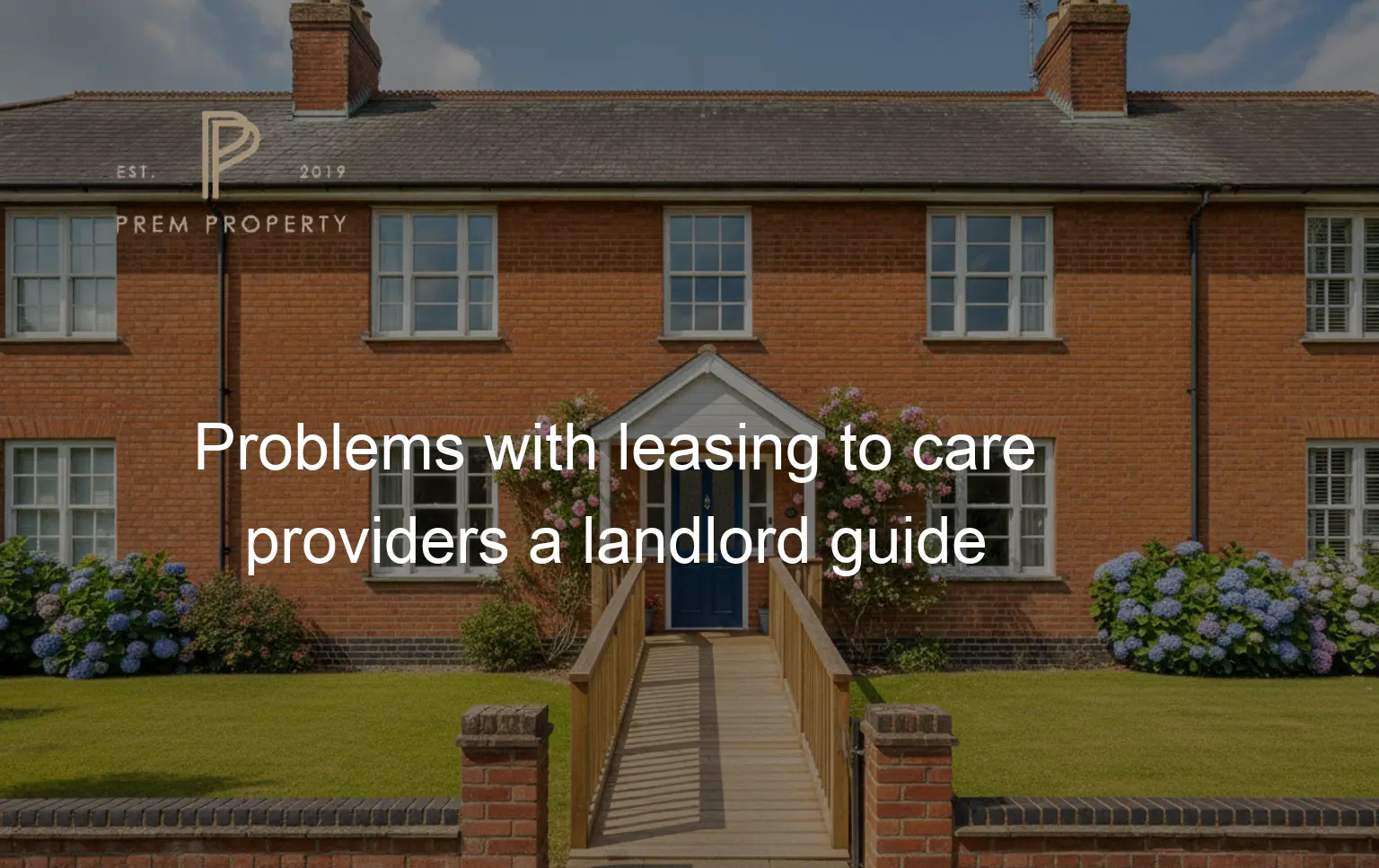
The main problems with leasing to care providers involve navigating complex regulations from bodies like CQC and Ofsted, the critical need for thorough tenant vetting, managing specialist property adaptations and structuring long-term, secure lease agreements. These challenges require careful planning and due diligence to protect your investment.
Leasing your property to the care sector holds significant appeal. The promise of long-term leases and stable demand funded by local authorities can seem like an ideal arrangement for landlords. However, this stability comes with a unique set of challenges that are very different from standard residential or commercial lettings.
This guide is designed to help landlords and property investors in the West Midlands, Greater London and the Home Counties understand and navigate the common problems with leasing to care providers. By addressing these issues head-on, you can make informed decisions and build a sustainable partnership.
This article provides general information and guidance for landlords. It does not constitute legal, planning, financial or fire safety advice. You should always seek independent professional advice before entering into any agreement.
What Regulations and Compliance Issues Arise?
One of the first hurdles is the web of regulations that govern the care sector. Unlike a standard tenancy, a property used for care is subject to rigorous oversight and non-compliance can have serious consequences for both the provider and you as the landlord.
Understanding CQC and Ofsted Requirements
Properties leased to adult social care providers in England must meet standards set by the Care Quality Commission (CQC). If the property is for a children’s home, it will be regulated by Ofsted. These bodies inspect the service to ensure it is safe, effective and well-led. While the provider is responsible for the service delivery, the physical environment is a key part of their registration and ongoing compliance. Landlords need to understand what a CQC inspection means for your lease, as a poor report or failed inspection can put the tenancy at risk.
The Importance of C2 Use Class Planning
Most properties used for residential care require a specific planning status. A standard house or flat typically has a C3 Use Class. For up to six residents receiving care and living together as a single household, C3(b) may apply. However, for larger residential institutions like care homes, you will likely need C2 planning permission. You can find the legal definitions in The Town and Country Planning (Use Classes) Order.
Securing this change of use can be a significant challenge. Local authorities have different requirements and may refuse applications based on local planning policies or community objections. It is vital to consult the local planning authority and review the official guidance on when planning permission is required before committing to a lease. For a deeper understanding, read our practical guide to C2 Change of Use.
Ongoing Health and Safety Obligations
Health and safety responsibilities are heightened in a care environment. Fire safety is a particularly critical area governed by The Regulatory Reform (Fire Safety) Order 2005. The lease must clearly state who is responsible for what, from fire risk assessments to the installation and maintenance of systems like alarms and emergency lighting. In many lease arrangements for supported housing, the care provider tenant takes on the risk for health and safety compliance as part of the agreement. You can learn more in this landlord’s guide to care home fire safety and the government’s specific fire safety guidance for residential care premises.

How Do You Vet a Care Provider Effectively?
The success of your lease hinges almost entirely on the quality and stability of your tenant. The challenges of renting to supported living providers are significant if you choose the wrong partner. Proper due diligence is not just recommended; it is essential.
Assessing a Provider’s Financial Stability
A major risk is the provider becoming insolvent, leaving you with rent arrears and a vacant, specially adapted property. Before signing a lease, you must investigate their financial health. You can check a provider’s information on Companies House for their accounts and filing history. Be wary of newly formed companies with no trading history. The CQC also monitors the financial health of certain large providers through its Market Oversight scheme.
Verifying Operational History and Reputation
A provider’s track record is a strong indicator of their reliability. You should always check their inspection history. For children’s homes, you can search for Ofsted inspection reports online. For adult care, you can check the CQC register. Look for providers with consistent ‘Good’ or ‘Outstanding’ ratings. A history of ‘Requires Improvement’ or ‘Inadequate’ ratings is a major red flag and highlights one of the biggest problems with leasing to care providers. There are many lessons property investors learn about Ofsted the hard way.
Understanding Their Funding Model
How does the provider get its income? Most are funded through contracts with local authorities. It is wise to understand their relationship with these commissioners and the stability of their funding streams. A provider with a diverse portfolio of contracts across multiple local authorities may be a more secure bet than one reliant on a single source of income. Gaining insight into understanding care funding models is a key part of your due diligence, which can be followed using a property due diligence checklist.
Who Manages Property Modifications and Maintenance?
Properties used for care almost always require modifications, from minor accessibility adjustments to major structural changes. Clarifying responsibility for these works and ongoing maintenance from the outset is crucial to avoid future disputes.
Who Pays for Specialist Adaptations?
Care homes need features like ramps, accessible bathrooms, hoists, robust fire alarm systems and specific room layouts. The lease must clearly define who is responsible for the cost of installing these adaptations. Often, the care provider will cover these costs, but this needs to be explicitly stated in the heads of terms and the final lease. These adaptations are a key part of meeting the necessary care home property requirements for landlords.
Clarifying Repair Responsibilities with an FRI Lease
Leases in this sector are typically Full Repairing and Insuring (FRI) leases. This means the tenant is responsible for all costs of repair, maintenance and insurance for the property. While this reduces the landlord’s direct management burden, it is vital that the lease terms are unambiguous. You need to be clear on what constitutes a repair versus an improvement. A well-drafted guide to care property leases can help you understand the nuances.
Managing Wear and Tear vs Damage
A property housing multiple residents, some with complex needs, will likely experience higher levels of wear and tear than a standard family home. The lease should anticipate this. In lease-based agreements for supported housing, the care provider tenant often contractually takes on the risk for dilapidations. This means they are responsible for returning the property to its original condition at the end of the term, accounting for fair wear and tear. A detailed schedule of condition at the start of the lease is essential to avoid disputes later.
How Should You Structure the Lease and Exit Strategy?
The long-term nature of care leases is a double-edged sword. While it offers income security, it can also lock you into an underperforming partnership. A robust lease and a clear exit strategy are your primary tools for managing this landlord risks care home lease.
The Commitment of Long-Term Leases
Care providers need long-term security, so leases of 10 to 25 years are common. This long commitment becomes a significant problem if the provider proves to be a poor operator or their financial situation deteriorates. You could be tied to a failing tenant with limited options to regain possession of your property. It is important to be aware of the common issues with children’s home leases and other care properties.
Negotiating Break Clauses
A break clause allows either the landlord or tenant (or both) to terminate the lease early under specific conditions. As a landlord, you might want a break clause linked to the provider’s performance, such as receiving a poor CQC or Ofsted rating. Providers will often resist such clauses, but they can be a vital safeguard for you. The specifics of these clauses must be carefully drafted by a solicitor.
The Importance of a Reinstatement Clause
What happens at the end of a 25-year lease? The specialist adaptations made for care use may make the property unsuitable for the general rental market. A reinstatement clause legally obliges the tenant to remove their alterations and return the property to its original state at their own expense. This is a critical but often overlooked aspect of mitigating the long-term problems with leasing to care providers.

What Are the Reputational Risks for Landlords?
Finally, landlords must consider the non-financial risks. Your reputation as a property owner can be affected by the quality of the service operating from your building and its relationship with the local community.
During the planning stage, proposals for care facilities can sometimes face objections from local residents. While planning decisions are made on material considerations, community friction can create a difficult environment.
More importantly, if your chosen tenant operates the home poorly, leading to safeguarding issues or negative press, your name and property can become associated with that failure. This reputational damage can be lasting. The government has published a report on Specialised Supported Housing that touches on some of these risks. Good providers work hard to maintain positive relationships with neighbours to avoid complaints about issues like parking or noise, but a poor provider can create significant problems for you as the landlord.
Standard Let vs Care Provider Lease Comparison
Understanding the fundamental differences between a standard residential tenancy and a commercial lease to a care provider is key to managing your expectations and risks.
| Feature | Standard Residential Let | Care Provider Lease |
|---|---|---|
| Lease Term | Typically 6-12 months (Assured Shorthold Tenancy) | Typically 10-25 years (Commercial Lease) |
| Tenant | Individual or family | A business (the care provider organisation) |
| Rent | Market rent paid by the individual | Commercial rent often funded by local authority contracts |
| Repairs | Landlord responsible for most repairs (Landlord and Tenant Act 1985) | Tenant often responsible under a Full Repairing and Insuring (FRI) lease |
| Regulations | Standard landlord compliance (gas safety, EPC, EICR) | Standard compliance plus CQC/Ofsted and specific planning (C2) |
| Property Use | Standard residential use (C3) | Specialist care use, often requiring adaptations (C2/C3b) |
A 5-Step Process for Initial Provider Vetting
Here is a basic process you can follow when a care provider first approaches you about your property.
- Check Their Regulatory Standing: Your very first step should be to look up the provider on the CQC or Ofsted website. Check their overall rating and read their latest inspection reports in full.
- Verify Their Corporate Status: Use the free Companies House service to check their company details. How long have they been trading? Are their accounts filed on time? Look for any signs of financial distress.
- Ask for Their Commissioning Body: Enquire which local authorities they are contracted with. A provider with multiple, long-standing contracts is generally a more stable proposition.
- Request Business and Financial References: Ask for references from other landlords they work with and potentially their business bank. While they may not provide everything, their willingness to be transparent is a good sign.
- Assess Their Experience: Question them about their experience with properties like yours. Do they have a clear plan for managing the property, securing planning permission and funding the necessary adaptations?
Common Mistakes and Myths
- Myth: Guaranteed rent means zero risk. No property investment is without risk. While a long lease to a provider offers security, the risk of tenant failure, regulatory issues or property damage always exists. Agreements must be read carefully.
- Mistake: Assuming any large house is suitable. Care providers have specific needs regarding location, layout, accessibility and proximity to amenities. Not every property will meet the care home property requirements for landlords.
- Myth: The provider handles all the compliance. While the provider is responsible for operational compliance, the landlord retains responsibilities for the building itself. The lease must clearly separate these duties to avoid confusion.
- Mistake: Skipping professional legal advice on the lease. A commercial lease for a care home is a complex legal document. Using a generic template or failing to have it reviewed by a solicitor specialising in commercial property is a significant error.
How Guaranteed Rent Can Help Mitigate Risks
For landlords who find the direct management of these challenges daunting, working with a specialist property management company can be a solution. At Prem Property, we offer guaranteed rent solutions that can help address some of the problems with leasing to care providers. This isn’t a simple letting; it’s a partnership.
A professional partner can take on the burden of finding and performing due diligence on high-quality care providers. They have the experience to assess financial stability and operational history. Furthermore, they can help structure a robust lease agreement that protects your interests, ensuring clauses for maintenance, compliance and reinstatement are correctly drafted. This provides a layer of professional management between you and the end-user, helping to ensure the property is well-maintained and the tenancy runs smoothly.
When to Seek Professional Advice
Navigating the complexities of the care sector is not something a landlord should do alone. It is essential to build a team of professional advisors to guide you through the process.
- Solicitor: You must engage a solicitor with experience in commercial property leases, specifically within the care sector. They will draft and review the lease to ensure your interests are protected.
- Planning Consultant: If a change of use application is required, a planning consultant can manage the process, increasing the chances of a successful outcome.
- Accountant: An accountant can advise on the financial implications of the lease, including tax considerations like VAT, which can sometimes apply to commercial property transactions.
- Insurance Broker: You will need specialist landlord insurance for a property leased to a care provider. A broker can help you find the right policy that covers the specific risks involved.

How to Mitigate Problems with an Expert Partner
The challenges outlined in this article are significant, but they can be managed with the right expertise and approach. This is where a specialist partner like Prem Property can provide invaluable support. We help landlords create sustainable property partnerships by addressing the core problems with leasing to care providers from the very beginning.
Our expertise includes sourcing and thoroughly assessing high-quality care providers, going beyond basic checks to understand their operational and financial models. We have extensive experience in structuring robust lease agreements that protect landlord interests, built on our understanding of what every care home landlord needs to know. With a deep knowledge of the property requirements in our key operating areas, including Birmingham and Greater London, we ensure any partnership is built on a solid foundation.
Key Takeaways
- Leasing to care providers offers long-term income but comes with unique challenges in regulation, tenant quality and property management.
- Rigorous due diligence on a provider’s financial stability and regulatory history (CQC/Ofsted) is non-negotiable.
- Planning permission, particularly C2 use class, is often a major hurdle that must be addressed early in the process.
- The lease agreement is your most important tool. It must be a commercial FRI lease that clearly defines all responsibilities, including adaptations and reinstatement.
- Reputational risk is a real factor; the quality of the care provider directly reflects on you as the property owner.
- Working with a specialist partner can help you navigate these complexities and mitigate many of the associated risks.
Frequently Asked Questions
What are the biggest risks when leasing a property to a care provider?
The biggest risks include tenant insolvency leading to rent loss and a vacant property, non-compliance with CQC or Ofsted regulations jeopardising the lease and disputes over property damage or the cost of adaptations. These are significant problems with leasing to care providers that require careful management through a strong lease and thorough vetting.
Who is responsible for CQC compliance, the landlord or the care provider?
The care provider is the registered entity and is directly responsible for meeting CQC standards for the care they deliver. However, the landlord is responsible for ensuring the physical property is safe and meets legal requirements. The lease should clearly define where each party’s duties begin and end to avoid compliance gaps.
How do I check if a care provider is financially stable?
You should review their published accounts on Companies House, ask for business references and understand their funding model, particularly their contracts with local authorities. A history of consistent profitability and timely financial filings is a positive sign. A lack of financial transparency is a major red flag.
What is a reinstatement clause in a care home lease?
A reinstatement clause is a contractual term that obliges the tenant to remove any alterations they have made and return the property to its original condition at the end of the lease. This is crucial in care leases to cover the removal of specialist adaptations like ramps or modified bathrooms, which can be costly.
Does leasing to a care home affect my property insurance?
Yes, standard landlord insurance is not sufficient. You will need a specialist commercial property insurance policy that covers the specific use as a care facility. This type of use presents different risks and you must inform your insurer to ensure your cover is valid and adequate.
UK Guidance and Further Reading
Final Thoughts
While there are clear problems with leasing to care providers, these challenges are not insurmountable. For the right landlord with the right property, the care sector can offer a secure and rewarding long-term investment that also delivers social value. The key to success is to approach the opportunity with your eyes open, armed with knowledge and supported by professional expertise.
If you own a property in the Midlands or Greater London and are considering this path, a well-managed partnership can turn potential problems into a sustainable success. To learn more about how we can help you navigate this specialist market, we invite you to Discuss Your Property With Prem Property.