
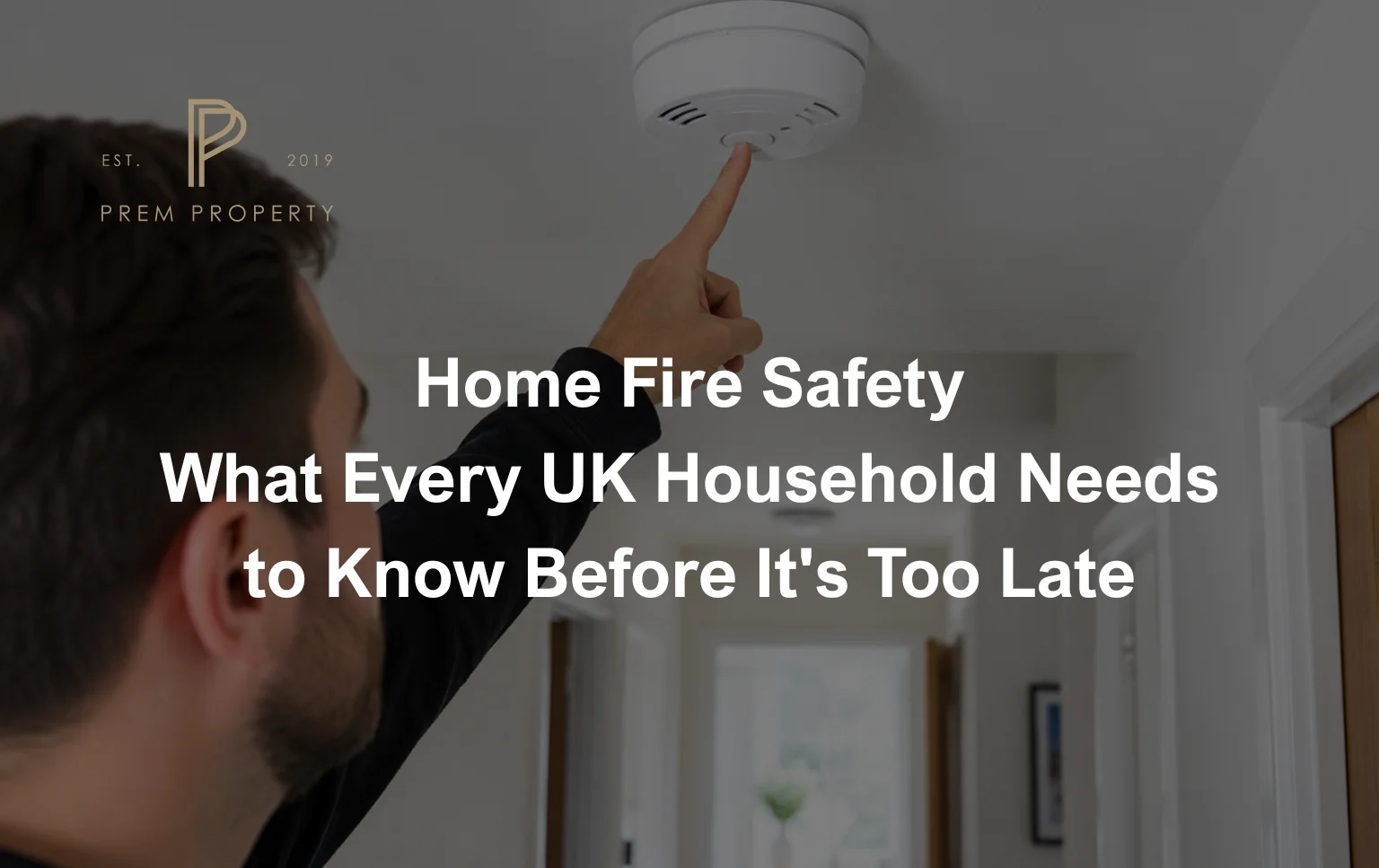
House fires in the UK kill around 300 people every year, and the majority of those deaths happen in homes that lacked working smoke alarms or a practised escape plan. Understanding home fire safety is not about paranoia; it is about giving yourself and your family the best possible chance if the worst ever happens.
Key Takeaways
- Smoke alarms must be fitted on every floor of your home and tested monthly to stay effective.
- Most fatal house fires happen at night, which is why a practised escape route matters more than many people realise.
- Cooking is the single biggest cause of accidental house fires in the UK, ahead of electrical faults and candles.
- Landlords have legal obligations under the Smoke and Carbon Monoxide Alarm (Amendment) Regulations 2022 to protect tenants.
- A carbon monoxide alarm is a separate device from a smoke alarm and is required wherever there is a solid fuel appliance.
- Fire risk increases significantly in properties with older wiring, hoarded rooms, or poor maintenance.
Why Smoke Alarms Are the Foundation of Fire Safety
No single piece of equipment saves more lives in a residential fire than a working smoke alarm. According to NHS guidance on fire safety, you are at significantly greater risk of dying in a fire if you do not have a functioning alarm in place. The reason is straightforward: most deadly fires happen at night when people are asleep and have no other way of detecting smoke in time.
What the Law Says About Alarms in England
Under the Smoke and Carbon Monoxide Alarm (Amendment) Regulations 2022, landlords in England must install at least one smoke alarm on every storey used as living accommodation, and a carbon monoxide alarm in every room with a fixed combustion appliance (excluding gas cookers). If you are a tenant and your landlord has failed to install these, your local council has the authority to enforce this obligation and issue a remedial notice.
Owner-occupiers are not legally required to install smoke alarms in the same way, but it would be difficult to argue against doing so when a basic battery-operated alarm costs around £5 to £10 and could save your life.
Types of Smoke Alarm and Where to Place Them
There are two main types of smoke alarm: ionisation alarms, which detect fast-flaming fires, and optical alarms, which detect slow, smouldering fires more effectively. A combined alarm, or using both types in different rooms, gives the broadest coverage.
- Place alarms in hallways and landings (every floor).
- Avoid fitting them directly in kitchens where cooking fumes cause nuisance trips.
- Do not fit them within 30 cm of a light fitting or a wall.
- Interconnected alarms (wired or wireless) are ideal: if one triggers, they all sound.
The Leading Causes of House Fires in the UK and How to Address Them
The Fire and Rescue Incident Statistics published by the Home Office show that cooking appliances account for around half of all accidental dwelling fires attended by fire services in England. Electrical faults, candles, and smoking materials follow some distance behind.
Kitchen and Cooking Safety
Most kitchen fires start because someone leaves a hob or grill unattended. A chip pan that overheats can go from a normal temperature to a fireball in a matter of minutes. Key habits to build:
- Never leave cooking unattended, especially frying.
- Keep the hob area free of tea towels, paper, and packaging.
- If a pan catches fire, do not pour water on it. Cover it with a damp cloth or a fire blanket and turn off the heat.
- Fit a fire blanket in your kitchen. They cost around £8 to £15 and can stop a small fire before it spreads.
Electrical Safety at Home
Overloaded extension leads and faulty appliances are responsible for thousands of fires annually. One practical habit is to unplug appliances you are not actively using, particularly overnight. Charging devices such as e-bikes, e-scooters, and power tools with lithium-ion batteries deserve special attention, as their batteries can catch fire during charging if the equipment is damaged or counterfeit.
The Electrical Safety First charity provides a useful product safety register where you can check whether your appliances are subject to manufacturer recalls, and you can review 10 proven c2 application secrets for rent success when considering how electrical safety integrates with lettings compliance. Checking your appliances annually is a genuinely worthwhile twenty minutes of your time.

Creating a Fire Escape Plan That Actually Works
Smoke alarms wake you up, but a rehearsed escape plan gets you out safely. Many people have a vague idea of how they would escape, but vague ideas do not work well when it is 3am, the hallway is filled with smoke, and you are disoriented.
Building Your Escape Route
Start by walking through your home and identifying at least two ways to exit from every room. In most UK terraced and semi-detached houses, upstairs bedrooms may only have a window as a secondary escape, so it is worth knowing:
- Whether your windows open wide enough to exit through.
- Whether a drop from the window would be survivable and how to reduce the distance using bedding if necessary.
- Where your keys are kept (never leave them in the lock at night, but ensure they are retrievable quickly in an emergency).
Write your plan down and practise it with everyone in the household, including children. The London Fire Brigade’s home fire safety page recommends doing a nighttime walkthrough so that family members experience the route in low-light conditions.
Families With Young Children or Elderly Relatives
If you have young children, involve them in the escape plan and make it a regular conversation rather than a once-a-year drill. Children who understand what the alarm means, where to go, and who to follow are far less likely to hide under a bed in a panic.
Older relatives or those with limited mobility need a specifically tailored plan. The Carers UK guidance on home safety covers how to assess whether a person with reduced mobility can exit unaided and when specialist firefighting services should be made aware of their situation. Most local fire and rescue services offer free home fire safety visits, particularly for vulnerable residents.

Legal Responsibilities for Landlords and Property Investors
If you own rental property, home fire safety is not simply an ethical concern: it is a legal one with financial and criminal consequences for non-compliance.
The Smoke and Carbon Monoxide Alarm (Amendment) Regulations 2022 tightened the rules significantly. Landlords who ignore remedial notices issued by their local authority can face civil penalties of up to £5,000. That is before you consider the moral and reputational consequences of a fire injuring or killing a tenant in a property you own.
Property investors who are new to the sector often overlook fire safety obligations when they are focused on acquisition, planning, and yield. If you are exploring specialist property types, understanding the 8 childrens home investment secrets property investors miss is a useful reminder that regulated residential uses come with elevated compliance duties, and fire safety sits at the top of that list.
Similarly, investors looking at HMOs, care settings, or houses in multiple occupation need to understand that fire risk management is a core part of the business model, not an afterthought. The 10 property care mistakes costing landlords money article highlights how failing to address fire safety and maintenance issues early regularly leads to costly remediation down the line.
For anyone navigating planning classifications when converting or repurposing a property, reviewing the 10 planning class mistakes property investors make can help you avoid the planning errors that create compliance headaches, including those that affect fire safety standards for the new use class.
Carbon Monoxide: The Silent Risk Alongside Fire
Carbon monoxide (CO) is not a fire risk directly, but it belongs in any serious conversation about home fire safety because the two hazards frequently share the same root causes: faulty appliances and poor maintenance. CO is colourless and odourless, and it kills without warning. The NHS carbon monoxide poisoning page describes the symptoms as similar to flu without the fever, which is why so many people initially dismiss them.
Since October 2022, landlords in England must install a carbon monoxide alarm in every room where a fixed combustion appliance is present (except a gas cooker). For owner-occupiers, best practice is to fit a CO alarm near every boiler, gas fire, or solid fuel appliance.
Replace CO alarms according to their manufacturer’s guidance, typically every seven to ten years, as the sensor degrades over time.
Things to Know
- Your local fire and rescue service will carry out a free Home Fire Safety Visit on request. They will check alarms, discuss escape routes, and sometimes provide free equipment.
- Tumble dryers are among the most commonly recalled appliances in the UK due to fire risk. Check whether yours is registered at Electrical Safety First.
- Candles cause around 3,000 house fires in the UK each year, most of them preventable by simply not leaving them burning in an empty room.
- Smoke rises, so in a fire you should stay low when moving through a smoke-filled room.
- If you rent your home and are concerned about fire safety, you can ask your local council’s environmental health team to inspect the property under the Housing Health and Safety Rating System.
- For those considering applying for HMO licences or specialist residential uses, understanding how to align your fire risk assessment with the broader compliance process ensures that both requirements work in harmony rather than creating conflicting obligations.
Ready to Protect Your Home This Week?
Book a free Home Fire Safety Visit from your local fire and rescue service today. In England, you can find your local service and request a visit directly through the National Fire Chiefs Council website. Most visits take around 30 minutes, cost nothing, and could identify a risk you had not considered. If you are a landlord, make sure your compliance documentation is current, your alarms are tested, and your tenants have a written escape plan before your next tenancy begins.
Frequently Asked Questions
Q: How often should I test my smoke alarm?
You should test your smoke alarm at least once a month by pressing the test button.
Most manufacturers recommend a monthly test, and you should replace the battery at least once a year (unless it is a ten-year sealed-battery model). If the alarm chirps intermittently, that is usually a low battery warning.
Q: Does my landlord have to replace a faulty smoke alarm?
Yes, under the Smoke and Carbon Monoxide Alarm (Amendment) Regulations 2022, landlords must ensure alarms are in working order at the start of each new tenancy and repair or replace faulty ones promptly following a tenant’s report.
If your landlord refuses to act, contact your local council’s housing department, as they can issue a remedial notice with a deadline for compliance.
Q: Is a carbon monoxide alarm the same as a smoke alarm?
No, they are completely different devices that detect entirely different hazards and cannot substitute for one another.
A smoke alarm detects combustion particles in the air from a fire. A carbon monoxide alarm detects CO gas from incomplete combustion in appliances such as boilers and gas fires. You need both, in the appropriate rooms.
Q: What should I do if my smoke alarm goes off at night?
Get out immediately, stay low in smoke, do not stop to collect belongings, and call 999 once you are outside.
Close doors behind you as you leave to slow the spread of fire. If a door feels warm to the touch, do not open it. If you cannot escape via the hallway, go to a room with a window and signal for help.
Q: Can I be fined for not having a smoke alarm in my home?
Owner-occupiers in England are not legally required to have smoke alarms and cannot currently be fined for not having them, but landlords face penalties of up to £5,000 for non-compliance.
While there is no fine for owner-occupiers, home insurance policies may be affected if a fire occurs in a property without working alarms, so fitting them is strongly advisable on both safety and financial grounds.
The Bottom Line on Home Fire Safety
Home fire safety comes down to three things done consistently: working alarms that you test, a rehearsed escape plan that everyone in the household knows, and habits that reduce the likelihood of a fire starting in the first place. None of these require significant expense or effort, but all three require deliberate attention.
Whether you are a homeowner, a tenant, or a property investor, the fundamentals are the same. Check your alarms this week, walk your escape route, and if you have any doubt about your property’s compliance, speak to your local fire and rescue service before a problem arises rather than after.