
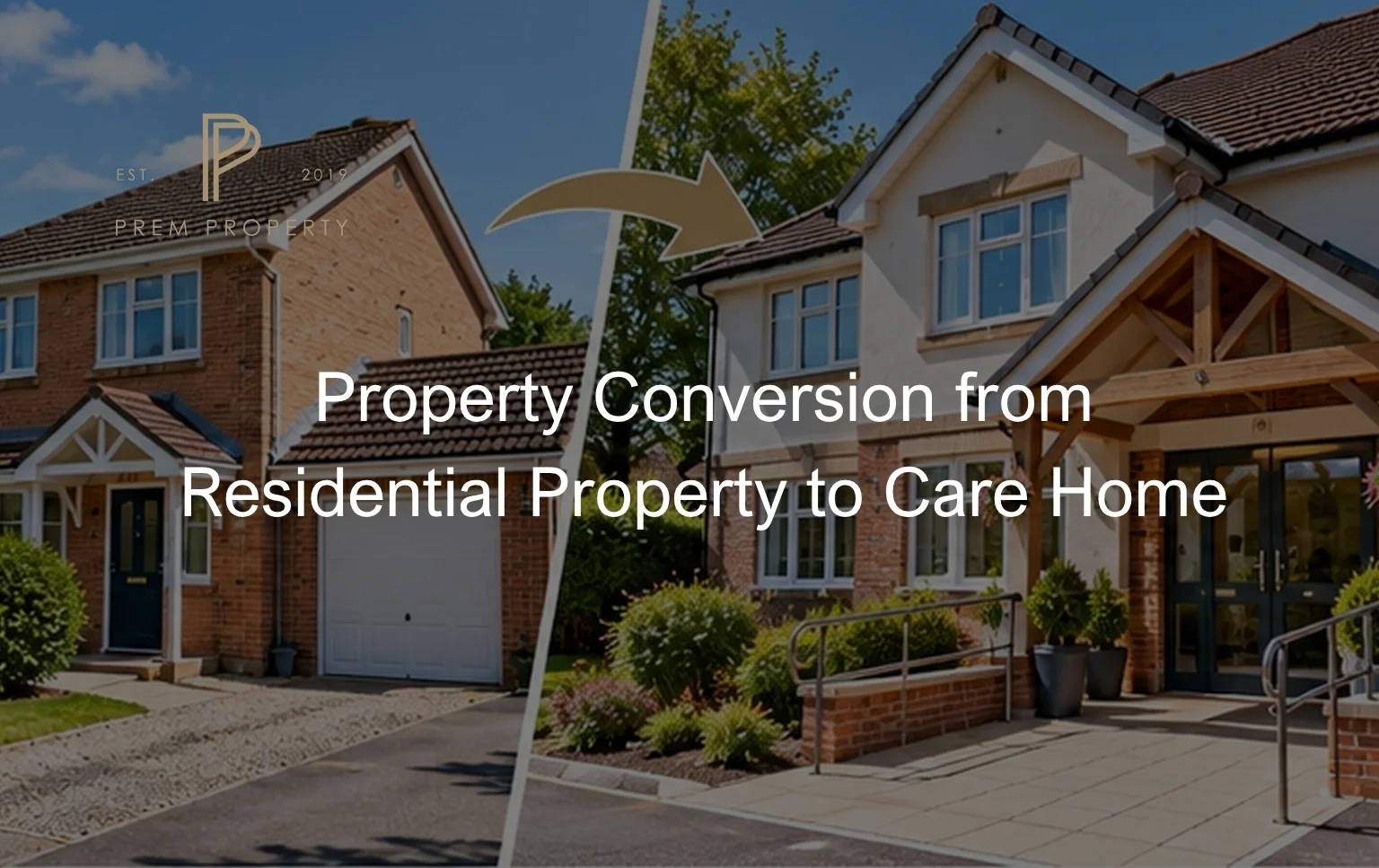
Property conversion from a residential property to a care home means changing an ordinary house so it can lawfully provide accommodation and care. Many houses can be converted but not all of them. The answer depends on the layout and the location as well as the planning and registration rules.
If you own a house and wonder whether it could work as a care home you are asking the right question. Property conversion can open up a reliable long-term use for a building because demand for care accommodation across England remains strong. The risk is that a conversion started without the right checks can become slow and expensive.
This guide gives you a practical overview. You will see which care uses a house can be converted for and how to judge suitability. It also covers the main stages and common mistakes plus what happens once the work is finished. For the detail on planning and fire safety there are dedicated guides which are linked in the relevant sections.
This article is general guidance only. It is not legal or planning or fire safety advice. Rules vary by council and by building so take professional advice on your own property.
What Does Property Conversion to a Care Home Involve?
A conversion has three parts that need to line up. The building must be suitable and the use must be lawful. The operator must be able to run the home within the rules of its regulator.
In practice that means checking the planning position and upgrading the building where needed. It also means making sure fire safety and building regulations are met and that a registered provider is ready to operate. Skipping any one of these can stall the whole project.
What Types of Care Home Can a Residential Property Become?
Not every care use works in every house. The table below shows the most common options and what to check for each.
| Conversion type | Typical use | Key checks |
|---|---|---|
| Residential care home | Accommodation and personal care for adults who need regular support | Use class (often C2) plus layout and accessibility and fire precautions |
| Residential Children’s Home | A home for children cared for by a registered provider | Planning position (C2 or C3(b)) plus Ofsted registration and neighbour impact |
| Supported living property | Housing with support for people who want to live as independently as possible | How support is delivered and how the household works plus fire risk assessment |
| Specialist accommodation | Tailored housing for particular needs | Resident needs and adaptations plus regulator requirements |
If you are exploring the children’s side of the sector our page on children’s homes explains how we approach it.
Is Your Property Suitable for Conversion?
Suitability comes before everything else. A house that works well for a family does not always work for care. Start by looking at:
- Layout. Enough bedrooms of a suitable size plus communal space and room for staff
- Access. Step-free access where residents need it and safe routes through the building
- Outdoor space. Safe and usable space that suits the residents
- Location. Access to transport and schools and services depending on the type of care
- Neighbours. Parking and the likely impact of staff changeovers and visitors
- Building condition. Structure and electrics and heating and any works already needed
Be honest at this stage. Some properties are simply the wrong fit and finding that out early costs far less than finding out after purchase.
Do You Need Planning Permission?
In most cases changing a normal home into a care use needs a close look at planning. Properties are placed in use classes under the Use Classes Order 1987. A standard home sits in C3 and a small group living together as a single household with care can fall under C3(b). Larger or more institutional care settings usually fall under C2.
Whether permission is needed depends on the number of residents and how care is delivered and how the property operates. Councils can also take different views so check with the local planning authority before you commit. The government’s guidance on when permission is required is a useful starting point. Our guide to C2 change of use covers the planning route in much more detail.
What About Building Regulations and Fire Safety?
A conversion often triggers building regulations. Care settings usually need higher standards than a family home. Layout and escape routes and fire doors and detection systems may all need upgrading. You can read more about the approval process in the government’s building regulations guidance.
Fire safety deserves particular attention because residents may need help to leave the building. A fire risk assessment by a competent person is part of the picture. Our guide to care home fire safety explains the main measures and responsibilities.
Who Regulates a Converted Care Home?
Registration is separate from planning and building regulations. A children’s home must be registered with Ofsted. The government sets out the process for how to register a children’s home. Other types of care are overseen by their own regulators so the operator should confirm what applies.
This is where many people get caught out. Planning permission does not give you registration. Registration does not replace planning or building regulations. A converted property usually needs to satisfy each of them.
What Are the Stages of Property Conversion? (Step by Step)
Every project is different but most follow a similar path.
- Assess the property. Check layout and condition and location against the type of care planned.
- Confirm the use class. Work out whether the planned use falls under C3 or C3(b) or C2.
- Get planning advice. Speak to the local planning authority or a planning consultant before you commit.
- Submit the planning application if needed. The Planning Portal is the main route for applications in England.
- Plan the works. Agree the scope with your architect and builder and building control.
- Complete the works. Include fire safety measures and any adaptations the residents need.
- Secure registration. The operator completes registration with the relevant regulator.
- Hand over to the operator. Agree the terms for occupation and ongoing management.
How Long Does It Take and What Does It Cost?
Timelines and costs vary too widely to give a reliable figure so treat blanket numbers online with caution. What you can plan around are the main influences.
Time is affected by:
- The planning route and any consultation
- The extent of the building works
- Building regulations sign-off
- Registration with the regulator
Cost categories usually include:
- Purchase or acquisition costs
- Planning and professional fees
- Building and fire safety works
- Furnishing and fit-out where the landlord provides it
- Contingency for the unexpected
Ask your professional team for a realistic timeline and budget based on your property and your council.
Common Mistakes and Myths About Converting to a Care Home
“Any house can become a care home.” Layout and location and local policy all matter. Some properties are the wrong fit.
“I’ll check the use class after I buy.” This is one of the costliest mistakes. Check before you commit.
“The works will be minor.” Care settings often need more than cosmetic changes. Fire safety and layout can add significant work.
“Planning permission means I can open.” Building regulations and fire safety and registration are separate requirements.
“I’ll find an operator once it is finished.” Without an operator in mind the property can sit empty. Line up the provider early.
“Neighbours won’t matter.” Local concerns can influence the planning outcome. Address them openly.
What Happens After the Conversion?
Once a property is converted and compliant the next question is how it will be run and how the income will work. This is where guaranteed rent can fit in. With guaranteed rent a landlord receives an agreed and reliable rental income rather than relying on a single tenant’s circumstances. Terms differ between providers so read any agreement carefully and take independent legal advice.
Prem Property is a Birmingham-based guaranteed rent and property management provider specialising in social and specialised housing. Through guaranteed rent solutions and professional property management landlords can reduce the day-to-day burden of maintenance coordination and compliance support. For landlords with a care-ready property in Birmingham or elsewhere in the West Midlands or Greater London this can mean more predictable income and a longer-term plan.
No arrangement removes all risk. Make sure the property is properly permitted and compliant before you enter any agreement. If you want to understand how a conversion project works from a landlord’s side our article on C2 care home conversion goes into further detail.
When Should You Get Professional Advice?
Earlier than you think. It is sensible to speak to a qualified professional if:
- You are unsure which use class applies
- You plan to house more than six residents
- The property sits in an area with local restrictions
- You are buying a property specifically for care use
- You need to plan building works or fire safety measures
A planning consultant or architect can help with the planning and design side. A competent fire risk assessor can advise on fire safety. Your solicitor can advise on contracts and agreements. An hour of advice before you buy can save months of delay.
Key Takeaways
- Property conversion to a care home depends on suitability and lawful use as well as the operator’s registration.
- Many houses can be converted but not all of them. Check layout and location first.
- The use class (C3 or C3(b) or C2) shapes the planning route.
- Building regulations and fire safety and regulator registration are separate from planning.
- Timelines and costs vary so take local professional advice.
- Line up an operator early.
- Once compliant a converted property can be placed on guaranteed rent with professional management but only after the right permissions are in place.
Frequently Asked Questions
Can any residential property be converted into a care home?
Not always. The layout and location and use class all affect whether a conversion is realistic. A feasibility check before purchase is the safest approach.
Do I need planning permission to convert a house into a care home?
In most cases the planning position needs careful checking. Some small arrangements may fall under C3(b) while larger care settings usually fall under C2. The local planning authority makes the final call.
What is the difference between C2 and C3(b)?
C3(b) covers up to six people living together as a single household with care provided. C2 covers residential accommodation with care on a broader or more institutional basis.
Does converting a property to a care home affect building regulations?
Often yes. A change of use can trigger building regulations requirements. Care settings usually need higher fire safety standards than a family home.
Is Ofsted registration the same as planning permission?
No. Planning permission decides whether the property can be used for the purpose. Ofsted registration decides whether the operator can run a children’s home.
How long does a property conversion to a care home take?
It varies with the planning route and the extent of the works and registration. A professional team can give you a realistic estimate for your property.
Can a landlord get guaranteed rent on a converted care home?
Landlords can explore guaranteed rent solutions for suitable care properties. The property should be properly permitted and compliant first.
Final Thoughts
Property conversion from a residential property to a care home can work well when the building and the planning position and the operator line up. It works badly when any one of them is assumed rather than checked. Start with a clear view of suitability and take professional advice early. Treat compliance as part of the plan from day one.
If you own or are exploring a suitable care property you can speak to Prem Property about guaranteed rent solutions and how professional property management could support your long-term plans.