A newly refurbished residential development offered its owner an opportunity to secure long-term rental income while providing temporary accommodation for vulnerable individuals.
The development comprises 16 self-contained flats: 13 one-bedroom flats and three two-bedroom flats. Rather than letting each flat separately, the landlord wanted to lease the whole property to a housing provider and free up time to focus on other projects.
Prem Property brought the landlord and housing provider together and helped facilitate a six-year guaranteed-rent agreement across the development.
The arrangement aligned the owner’s commercial objectives with a practical housing need: private, self-contained accommodation for people facing housing uncertainty.
Feature | Details |
|---|---|
Property type | Refurbished multi-unit residential development |
Number of flats | 16 |
Accommodation mix | 13 one-bedroom flats and three two-bedroom flats |
Intended use | Temporary accommodation for vulnerable individuals |
Lease term | Six years |
Letting structure | One housing provider leasing the development |
Prem Property’s role | Letting and procurement |
Having invested in the property’s development and refurbishment, the landlord wanted a long-term letting arrangement that would allow them to concentrate on other projects.
Letting 16 flats independently would have required separate tenant searches, tenancy administration and management of individual letting cycles. A lease covering the whole development offered a different approach: one organisational tenant and a defined commercial arrangement across all 16 flats.
Prem Property helped connect the owner with a housing provider seeking accommodation of this kind. The resulting agreement gave the landlord a structured route to leasing the property while making the development available for temporary accommodation.
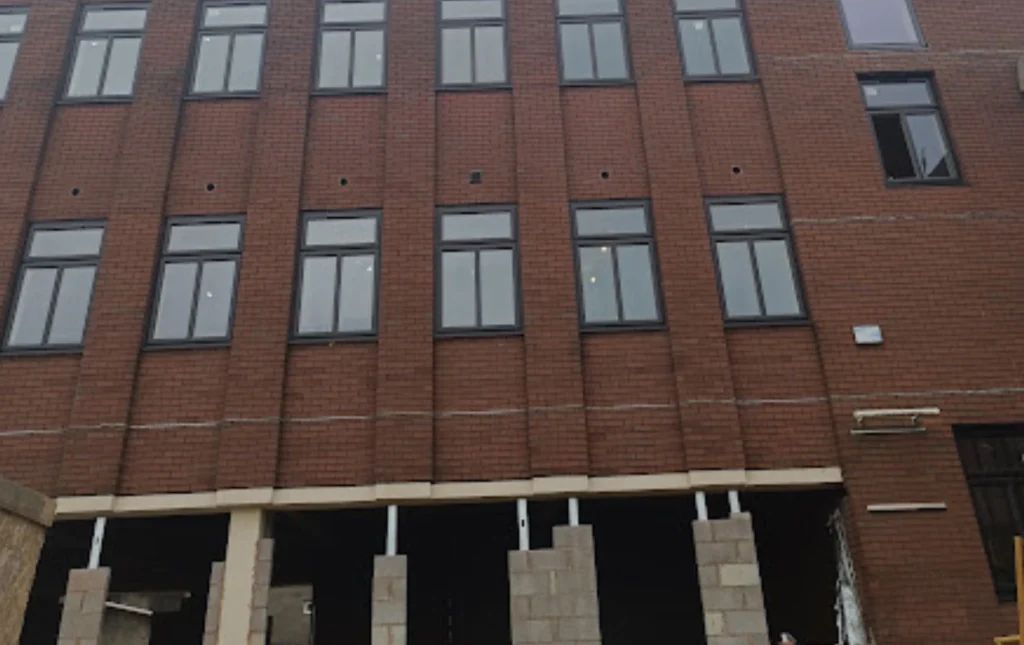
The development’s layout was central to its suitability.
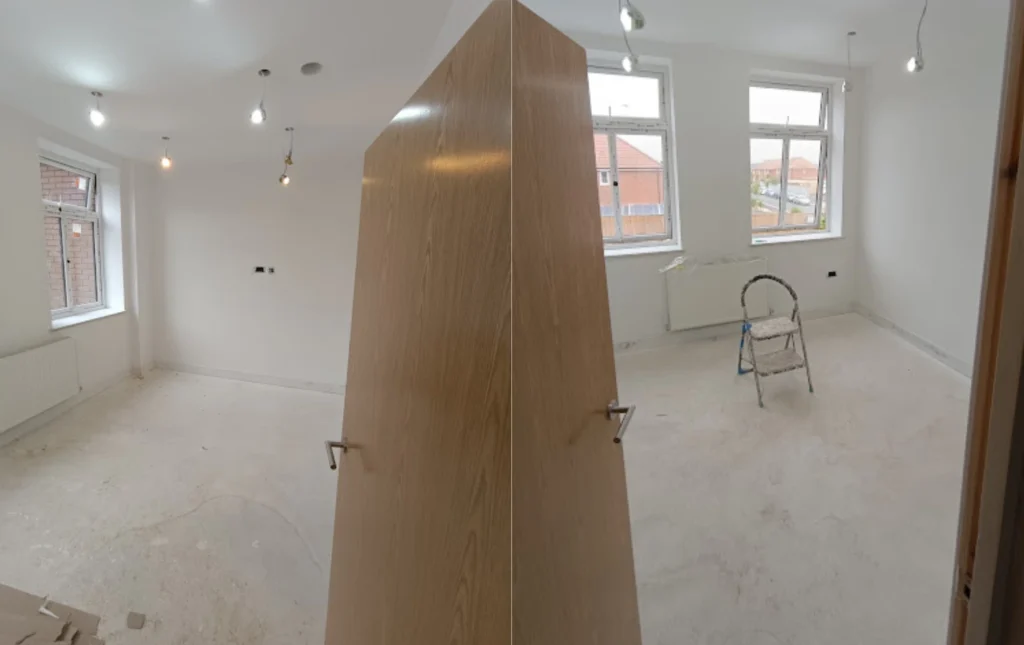
Its 13 one-bedroom flats and three two-bedroom flats offer a mix of accommodation sizes within one property. Each flat provides private living space and its own domestic kitchen facilities.
For someone experiencing housing uncertainty, those everyday features can make a meaningful difference. Having somewhere to prepare a meal, keep belongings and spend time in private can help preserve dignity and a sense of independence during a difficult transition.
The self-contained layout allows residents to maintain personal routines within their own accommodation. It also gives the housing provider access to multiple flats through a single property arrangement.
The agreed lease term was six years, with rent of £11,200 per calendar month. At that monthly rate, annual rent equates to £134,400.
The agreement included a midpoint break clause and rent review, alongside rent-free arrangements associated with phased completion. These terms form part of the commercial structure and should be considered when assessing income over the lease period.
For the landlord, the agreement established a long-term letting framework across the development. For the housing provider, it secured access to a substantial supply of accommodation under one lease, subject to its terms.
The development was scheduled to become available in stages, with 14 flats due to be completed first and two further flats following later.
The letting arrangement needed to reflect that delivery programme. Separate rent-free periods were agreed to accommodate the phased availability of the flats, with additional provisions addressing delays against the anticipated timetable.
This was an important part of matching the commercial agreement to the practical handover of the property. The arrangement recognised that a multi-unit development may need to move into use in stages.
Preparation for occupation included completion of refurbishment works, cleaning and provision of relevant property documentation. The draft transaction records reference fire risk assessment, energy performance documentation, electrical inspection reports and a schedule of condition.
A fire risk assessment undertaken during refurbishment identified matters requiring completion or implementation as the building moved towards occupation. That assessment formed part of the preparation process; it should not be treated as confirmation that every subsequent action had been completed.
The agreement also set out responsibilities for repairs, maintenance and property upkeep between the landlord and housing provider. Defining these obligations gave both parties a framework for addressing issues during the lease.
Having invested in the property’s development and refurbishment, the landlord wanted a long-term letting arrangement that would allow them to concentrate on other projects.
Letting 16 flats independently would have required separate tenant searches, tenancy administration and management of individual letting cycles. A lease covering the whole development offered a different approach: one organisational tenant and a defined commercial arrangement across all 16 flats.
Prem Property helped connect the owner with a housing provider seeking accommodation of this kind. The resulting agreement gave the landlord a structured route to leasing the property while making the development available for temporary accommodation.
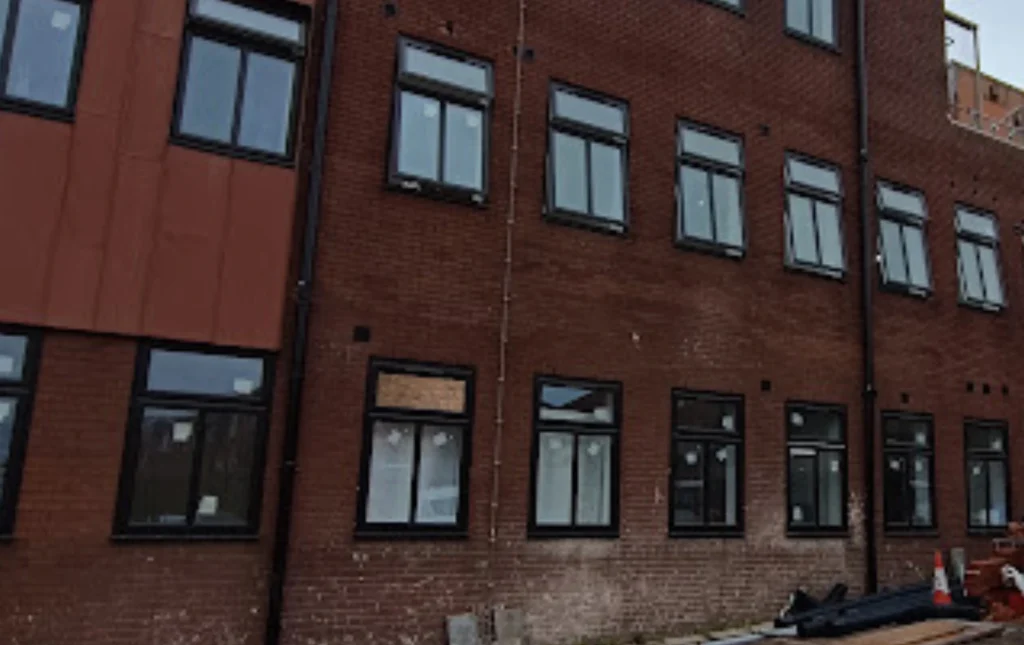
Prem Property helped turn a completed development opportunity into a long-term letting arrangement by connecting the landlord’s objectives with the housing provider’s requirements.
The work centred on:
The transaction illustrates the value of considering an entire block as a leasing opportunity when its layout and availability suit a housing provider’s needs.
The result brought together three connected needs: a landlord seeking a long-term letting solution, a housing provider requiring accommodation and vulnerable individuals needing somewhere to stay during a period of uncertainty.
Temporary accommodation serves an immediate housing need, but the experience of living there matters too. A self-contained flat offers a private space in which a resident can close their door, organise their belongings and take time away from the pressures surrounding their housing situation.
The development’s 16 flats provide that physical separation between private living space and the wider building. For individuals navigating disruption, this type of accommodation can help support personal dignity and a greater sense of control over daily life.
Access to a kitchen allows residents to prepare meals around their own preferences and schedules. Private accommodation also creates space for rest, personal administration and the ordinary tasks that continue even when someone’s housing circumstances change.
These are modest, practical features, yet they can shape how manageable a temporary stay feels. The opportunity to maintain familiar routines can provide some continuity while longer-term housing options are considered.
Temporary accommodation does not resolve every difficulty a resident may face. It can, however, provide a base from which to attend appointments, keep in touch with relevant services and consider what comes next.
The value of the development lies partly in making suitable residential space available for that interim period. Its one-bedroom and two-bedroom mix gives the provider different flat sizes to consider when making placements, subject to individual needs and suitability assessments.
The six-year lease gives the housing provider a longer-term framework for access to the development, subject to the agreed break clause and other lease provisions. This supports planning around an accommodation resource rather than sourcing every flat through separate agreements.
Having 16 self-contained flats within one development also brings property coordination into a single arrangement. Residents retain private accommodation while the provider works within a defined landlord and tenant relationship.
For the landlord, the transaction secured one organisational tenant across the block at an agreed monthly rent. This met the owner’s objective of establishing a long-term letting arrangement and creating more capacity to focus on other projects.
The lease still carries defined landlord obligations. Its value is the structure it provides: an agreed term, rental framework and allocation of responsibilities across the development.
By matching the property with a suitable housing requirement, Prem Property helped create a commercially structured letting arrangement with a meaningful purpose: making self-contained temporary accommodation available to vulnerable individuals.
If you own a block of apartments or a multi-unit residential development across the Midlands or London, Prem Property can help assess its suitability for a long-term lease with a housing provider.
Whether your property is ready to let or approaching completion, speak to us about its location, flat mix, condition and availability. We can discuss potential provider requirements and help explore an appropriate letting arrangement.
Contact Prem Property to discuss leasing your block of apartments.