
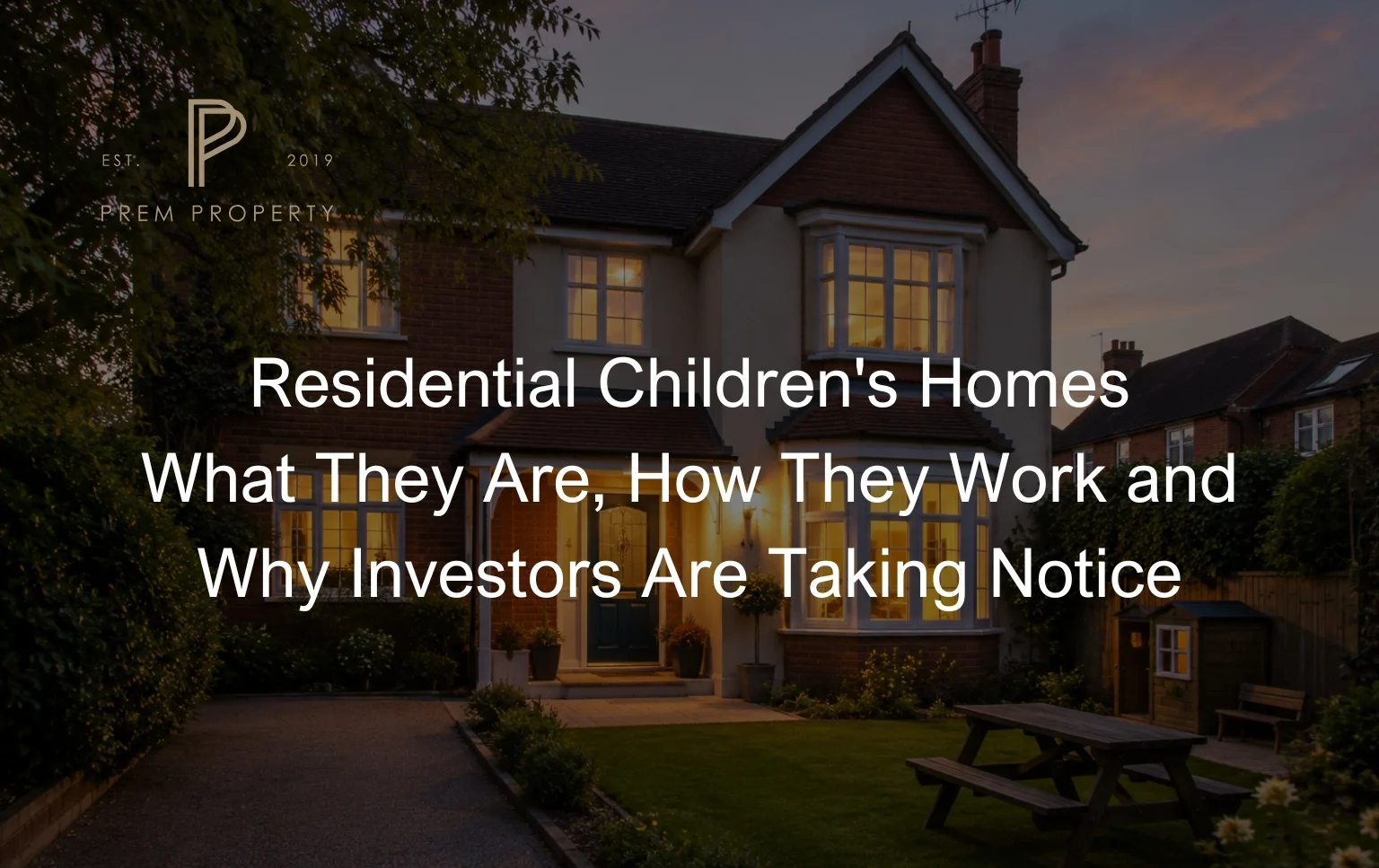
Residential children’s homes are regulated properties where looked-after children live and receive care outside of a family setting, typically managed by local authorities or private providers. They sit at the intersection of social care policy, property development, and long-term investment, making them one of the more complex but rewarding sectors in the UK property market.
The Scale of Need Behind This Sector
The UK’s looked-after children population has grown considerably over the past decade. According to Department for Education statistics on looked-after children in England, there were over 83,000 looked-after children in England alone as of 2023, with a significant proportion requiring residential placements rather than foster care.
This demand has not been met by supply, and the shortage of ofsted childrens homes regulations inspections and what investors need to know has become increasingly urgent as local councils frequently struggle to find suitable placements within their own boundaries. The BBC has reported on the crisis in children’s social care and how the shortage of regulated placements is pushing placement costs higher year on year.
That gap between demand and available provision is precisely what draws both social care operators and property investors into this sector. But it is not a market you can enter without understanding the regulatory landscape, the physical requirements, and the ethical responsibilities involved.
What Makes a Property Suitable for Children’s Care
Not every building qualifies as a children’s home. The physical property must meet specific standards before Ofsted will register it, and those standards exist for good reason. Children placed in residential care often have complex needs, and the environment they live in directly affects their wellbeing.
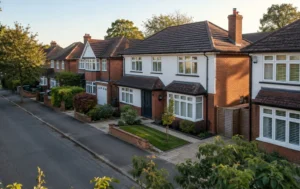
The property must feel like a home, not an institution. That means bedrooms sized appropriately for individual use, shared living and dining spaces, outdoor access, and enough separation between staff areas and children’s personal spaces. Depending on the children being cared for and the type of provision, adaptations such as sensory rooms, secure fencing, or reinforced fixtures may also be required.
From a planning perspective, most residential children’s homes fall under the c2 residential care home what investors and developers need to know, which covers residential institutions. This is distinct from standard residential (C3) use, and the transition from one to the other usually requires planning permission. Local planning authorities will consider factors like the impact on neighbouring properties, traffic, and parking when assessing applications.
Fire safety is another non-negotiable area. The Regulatory Reform (Fire Safety) Order 2005 applies fully to children’s homes, and operators must carry out and maintain detailed fire risk assessments. Home fire safety standards in residential care settings are substantially higher than those for ordinary dwellings, covering everything from detection systems and evacuation procedures to staff training protocols.
Ofsted: The Regulator That Controls Everything
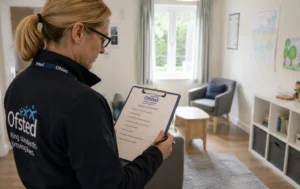
If there is one organisation that defines the operational reality of residential children’s homes, it is Ofsted. Every home in England must be registered with Ofsted before it can accept any child. Operating an unregistered home is a criminal offence.
Ofsted inspects homes using a framework that assesses outcomes for children rather than just process compliance. Inspectors look at children’s progress, their relationships with staff, how the home handles incidents, and whether leadership is effective. Homes are rated Outstanding, Good, Requires Improvement, or Inadequate, and that rating has direct financial consequences for operators.
For anyone entering this sector as an investor or developer, understanding Ofsted’s role is not optional background reading, as the 8 childrens home investment secrets property investors miss demonstrates through detailed analysis of how inspection outcomes affect long-term viability.
The Children’s Homes (England) Regulations 2015 form the legal backbone of how these homes must operate. They cover staffing ratios, record-keeping, safeguarding, complaints handling, and the overall statement of purpose that each home must have registered with Ofsted. Understanding all 10 role of ofsted facts that shape childrens homes helps prospective investors avoid common regulatory missteps that can derail a project before it gets started.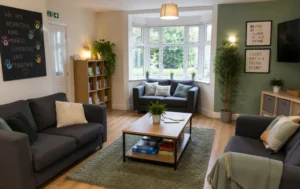
The Business Model: How Operators and Investors Work Together
The financial structure behind residential children’s homes typically involves two parties: the property owner (which may be an investor or developer) and the registered care provider (the operator). These two roles can be held by the same person, but are often split.
Property owners lease or sell the building to an operator who holds the Ofsted registration and employs the staff. The operator receives placement fees from local authorities, which are paid per child per week. These fees vary considerably across England, but placements for children with complex needs can command weekly fees of £3,000 to £7,000 or more per child. Operators use this income to pay staff, cover overheads, service the lease or mortgage, and, in time, generate profit.
For property investors, the appeal is a long-term, inflation-linked commercial lease with a specialist tenant. The net initial yields are typically stronger than standard residential lettings, and the tenant profile is stable given the ongoing demand for placements.
| Factor | Standard Residential Letting | Children’s Home Lease |
|---|---|---|
| Typical lease length | 6-12 months | 10-25 years |
| Tenant type | Individual occupant | Registered care provider |
| Income stability | Variable (voids, arrears) | High (backed by LA income) |
| Regulatory oversight | Limited | Extensive (Ofsted) |
| Yield potential | 4-6% gross | 7-12% net (operator dependent) |
| Planning class | C3 | C2 |
| Entry complexity | Low | High |
The financial dynamics of this specialist sector, including how Ofsted ratings affect operator income, why lease structures vary dramatically between operators, and what due diligence looks like, are explored in detail in dedicated analysis of the sector’s investment fundamentals.
Staffing Requirements and Why They Affect Property Design
Staffing in residential children’s homes is not just an operational concern. It directly shapes how the property needs to be configured. The Children’s Homes Regulations require a registered manager with relevant qualifications and experience, alongside sufficient staff to meet children’s needs at all times, including overnight.
This means most homes need staff sleeping or waking-night accommodation on site, office space for case recording, secure storage for confidential files, and areas where staff can handover between shifts without disturbing children. A property that lacks these spaces may need significant conversion work before it becomes operationally viable.
Staffing costs are typically the largest single expense for an operator, often accounting for 60-70% of placement income. For property investors assessing an operator’s financial resilience, understanding this cost structure is important. An operator running too close to the margin on staffing may struggle to maintain the property, keep up with repairs, or sustain the lease long-term.
Things to Know
- Residential children’s homes in England must be registered with Ofsted before accepting any child. There is no grace period or soft launch option.
- The registered manager is a legally accountable individual, not just a job title. Their qualifications and track record matter enormously to Ofsted and to any local authority placing children.
- Planning permission for C2 use is not guaranteed. Neighbouring objections and local planning policies can delay or block conversions, adding months and costs to a project timeline.
- Local authority placement decisions are not purely financial. They weigh Ofsted ratings, proximity to the child’s family, and the match between the home’s specialisms and the child’s needs.
- Private equity interest in the children’s residential care sector has grown significantly since 2015, and with it, regulatory scrutiny. The Independent Review of Children’s Social Care recommended greater oversight of profit extraction in the sector.
- Not-for-profit operators are not immune to financial failure. Governance, reserves, and management quality matter regardless of profit status.
Ethical Dimensions Investors Cannot Ignore
The children placed in residential care are among the most vulnerable people in the country. Many have experienced abuse, neglect, or multiple placement breakdowns. The quality of the home they live in and the stability of the organisation running it directly affects their outcomes.
This is not a sector where cutting corners to improve yield is ever acceptable. Local authorities are increasingly scrutinising operator finances, and the Competition and Markets Authority’s children’s social care market study highlighted concerns about how profit is distributed in the sector. Investors and operators who prioritise property returns over child outcomes risk regulatory action, contract losses, and reputational damage.
Responsible investment in this sector means understanding that your returns are funded by public money and tied to the welfare of children. That is not a reason to avoid the sector. It is a reason to take it seriously.
You can explore further resources on property investment in care-related sectors through the blogs section, where a range of related topics are covered in depth.
Frequently Asked Questions
Q: How many children can live in a residential children’s home?
Most homes in England are registered for between two and five children, with larger homes being less common and subject to greater scrutiny.
Ofsted and local authorities tend to favour smaller, more therapeutic settings where staff-to-child ratios are higher and relationships more consistent. Homes registered for more than six children face more complex regulatory requirements and are increasingly rare in new registrations.
Q: Can an individual with no care background invest in residential children’s homes?
Yes, as a property investor rather than an operator, you do not need a care background, but you must understand the regulatory environment before committing capital.
The typical model involves investing in the property and leasing it to a registered operator who holds the Ofsted registration. However, due diligence on the operator’s track record, financial health, and Ofsted history is essential before signing any lease agreement.
Q: How long does it take to get a children’s home registered with Ofsted?
The Ofsted registration process typically takes between three and six months, though it can take longer if applications are incomplete or queried.
This timeline begins before any children are placed, and the property must be ready and inspected before registration is granted. Planning delays or conversion work can add significantly to the overall project timeline.
Q: What happens to a children’s home lease if the operator receives an Inadequate Ofsted rating?
An Inadequate rating does not automatically terminate a lease, but it triggers a chain of consequences that can ultimately lead to the home being closed by Ofsted.
Ofsted may issue a notice of action, restrict admissions, or in serious cases cancel registration entirely. If a home is closed, the local authority moves children to alternative placements and the operator loses income, which directly affects their ability to service the lease.
Q: Are residential children’s homes subject to council tax or business rates?
Residential children’s homes are generally assessed for business rates rather than council tax, as they constitute a commercial care operation rather than a private dwelling.
Operators may be eligible for certain reliefs depending on their charitable status and local authority policy. It is worth taking specialist advice from a commercial property solicitor or chartered surveyor with experience in care sector assets before completing any acquisition.
The Bottom Line on Residential Children’s Homes
Residential children’s homes represent a genuinely meaningful investment opportunity within the UK property market, but they are not a passive income play for the uninformed. The regulatory requirements are rigorous, the due diligence is deep, and the ethical responsibilities are real. Getting it right, however, means contributing to better outcomes for some of the country’s most vulnerable children while building a stable, long-term asset.
Your starting point should always be research. Understand the Ofsted framework, know the C2 planning class, and build relationships with experienced operators before committing to a site. The more thoroughly you understand the sector, the better placed you will be to find the right opportunity, structure it correctly, and hold it for the long term.