
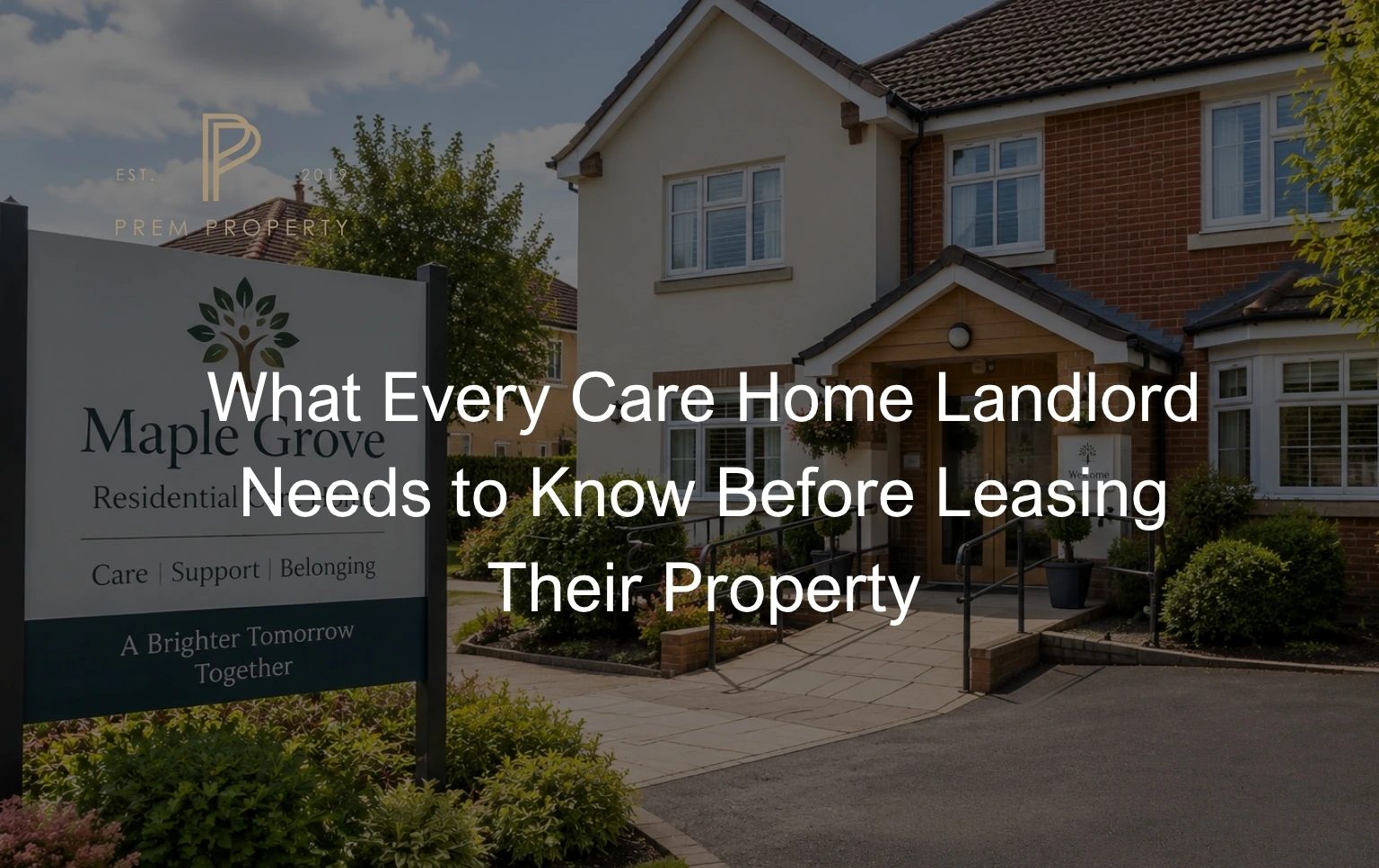
A care home landlord is a property owner who leases their building to a registered care provider, typically under a commercial or specialist residential lease arrangement. This niche corner of the property market offers landlords long-term, stable income, but it comes with a specific set of requirements, planning considerations, and due diligence steps that differ significantly from standard buy-to-let.
Key Takeaways
- Care home landlords lease properties to registered operators rather than individual tenants, creating a fundamentally different income and management model.
- Specialist use classes, particularly C2 residential care, affect what planning consent is needed before a property can be used for care purposes.
- Long-term leases with operators typically reduce void periods and provide more predictable income than standard residential lettings.
- Compliance with fire safety, building standards, and Care Quality Commission (CQC) suitability requirements is the shared responsibility of both landlord and operator.
- Working with a specialist property partner such as Prem Property can simplify the procurement, compliance, and leasing process considerably.
- Understanding the distinction between supported living, children’s homes, and residential care is essential before committing to any lease arrangement.
Becoming a care home landlord is not simply a matter of handing over keys to an operator and collecting rent each month. It is a specialist role that sits at the intersection of property investment, social care regulation, and community impact. Done well, it can provide a landlord with decades of reliable income while simultaneously supporting some of the most vulnerable people in society.
This article explains how the role works in practice, what makes a property suitable, what lease structures are commonly used, and how landlords across the Midlands and Greater London are using specialist partners to make the most of this opportunity.
Why Landlords Are Turning to the Care Sector
The UK’s ageing population and growing demand for specialist care accommodation have created a significant supply gap in the care property market. According to the NHS, demand for residential and community-based care services continues to rise, placing pressure on providers to source adequate, CQC-compliant properties in residential areas.
For landlords, this gap represents an opportunity. Rather than managing short-term assured shorthold tenancies with individual tenants, a care home landlord enters into a commercial-style lease with a regulated operator, often for a term of five to twenty-five years. The operator takes on the day-to-day running of the property and the care of residents, while the landlord receives a fixed, guaranteed rental income.
This model has several practical advantages:
- Fewer void periods, as operators require stable premises to run their services
- Reduced tenant management stress, since the landlord’s relationship is with one professional organisation rather than multiple individuals
- Properties tend to be well-maintained, as operators are subject to regulatory inspections
- Long lease terms provide income predictability that is difficult to achieve in standard residential lettings
The Office for National Statistics has consistently reported an increase in the proportion of the UK population aged 65 and over, a demographic trend that underpins long-term demand for care accommodation. Landlords who position their portfolios within this sector early are likely to benefit from sustained demand for years ahead.
Understanding Use Classes and Planning Requirements
One of the first questions any prospective care home landlord must address is whether their property has the correct planning permission for care use. In England, the planning use class system determines what activities can lawfully take place within a building.
Residential care homes typically fall under the what is a c2 property classification, which covers residential institutions including care homes, nursing homes, and children’s homes. This is distinct from C3 (standard residential dwellings) and C4 (houses in multiple occupation), and converting a property from one class to another may require a formal planning application.
Landlords should be aware that:
- A standard residential property cannot simply be handed to a care operator without checking whether a change of use is required
- Local planning authorities have differing approaches to C2 applications, and some areas may have specific policies around care home provision
- Permitted development rights have limitations, and not all conversions from C3 to C2 are automatically allowed
Understanding the care home requirements relevant to their property type is essential before a landlord agrees to any lease. Operators will often conduct their own due diligence, but the responsibility for ensuring lawful use ultimately rests with the property owner.

The Care Quality Commission is the independent regulator of health and social care in England, and its registration requirements mean that operators must demonstrate the suitability of premises as part of their registration process. As a landlord, this means the property must meet specific physical standards before an operator can legally begin providing care services from it.
Lease Structures: What Landlords Should Expect
The lease structure used in care property arrangements differs considerably from a standard residential tenancy agreement. A care home landlord will typically be working with one of the following arrangements:
Full repairing and insuring (FRI) lease: The operator takes on responsibility for maintenance, repairs, and building insurance. This significantly reduces the landlord’s day-to-day involvement and ongoing costs.
Guaranteed rent lease: The landlord receives a fixed income regardless of occupancy levels within the care home. This is particularly appealing for landlords who want income certainty without exposure to the operator’s commercial risk.
Management agreement with lease overlay: The landlord retains some involvement in property oversight while the operator manages care delivery.
For those exploring a residential care home for lease, the key variables to negotiate include lease length, rent review mechanisms, dilapidation terms, and the operator’s obligations around CQC compliance.
Landlords are strongly advised to seek specialist legal advice before signing any care property lease. Law firms with experience in healthcare real estate will be familiar with the specific provisions that protect landlord interests while giving operators the operational flexibility they need.
Property Suitability: What Operators Look For
Not every residential property is suitable for care use. Operators evaluating a property as potential care accommodation will typically assess:
- Bedroom count and minimum room sizes (often a minimum of 10-12 square metres per bedroom for CQC compliance)
- Access and mobility requirements, including level access, wide doorframes, and potential for wet room installation
- Garden space and outdoor amenity areas
- Car parking for staff and visiting professionals
- Location relative to healthcare services, transport links, and community resources
- Kitchen and communal space capacity
- Fire safety provision, including compartmentalisation, fire doors, and detection systems
For landlords interested in the specialist housing sector more broadly, it is worth noting that different care categories have different physical requirements. A property suitable for supported living may not meet the standards required for a registered children’s home, and a nursing home will have different specifications again from a residential dementia care facility.
The Which? later life care guide provides useful context on what families expect from care environments, which in turn reflects what operators need from the properties they lease.
How Guaranteed Rent Works in Care Property
One of the most attractive aspects of the care home landlord model is the availability of guaranteed rent arrangements. Rather than exposing a landlord to the fluctuating occupancy rates that affect a care home’s revenue, a guaranteed rent agreement provides a fixed monthly payment for the duration of the lease.
Prem Property, based in Birmingham and operating across the Midlands and Greater London, specialises in exactly this model. The company connects landlords with registered care and housing providers, structuring arrangements that deliver reliable income while reducing the administrative burden on property owners.
By working with Prem Property, landlords benefit from:
- A single point of contact for property management queries
- Compliance support to help ensure properties meet the necessary standards
- Access to a network of vetted operators looking for suitable care properties
- Reduced void risk through long-term lease commitments
- Professional oversight to maintain property condition throughout the tenancy
Landlords who want to understand more about how these arrangements are structured can read about the care property lease process in detail, or browse additional resources across Prem Property’s blogs for sector-specific insights.
Comparing Care Property Leasing with Standard Buy-to-Let
The table below illustrates how the care home landlord model compares with a typical standard residential let:
| Factor | Standard Buy-to-Let | Care Home Landlord |
|---|---|---|
| Lease length | 6-24 months typical | 5-25 years typical |
| Tenant type | Individual or family | Registered care operator |
| Void risk | Higher | Lower |
| Income certainty | Variable | High (guaranteed rent) |
| Regulatory complexity | Low-moderate | Moderate-high |
| Property management | Landlord or agent | Often operator-managed |
| Planning requirements | C3 (standard residential) | C2 or specialist use |
| Relationship management | Multiple tenants | Single operator |
| Community impact | Indirect | Direct |
This comparison makes clear that while care property leasing requires more upfront due diligence, the medium and long-term benefits in terms of stability and income predictability are substantial.
Risks to Consider Before Committing
No investment model is without risk, and landlords considering this route should enter with clear eyes. Key risks include:
- Operator insolvency: If the care operator becomes insolvent, the landlord may need to find a replacement operator or revert the property to standard residential use, either of which carries cost and delay.
- Regulatory failure: If an operator loses its CQC registration, it may be required to cease operating from the property, affecting rent payments.
- Property condition: Some care uses result in higher wear and tear, particularly in properties housing individuals with complex needs.
- Planning refusal: If a property does not yet have C2 consent and the application is refused, the landlord may be left with a property that cannot fulfil its intended purpose.
- Market changes: Shifts in local authority commissioning or changes to social care funding models can affect operator viability.
The The Guardian’s coverage of social care funding in England provides useful background on the policy environment that care operators navigate, which in turn shapes the risk profile for landlords who lease to them.

Mitigating these risks involves careful operator selection, robust lease terms, and working with a specialist property partner that understands the regulatory landscape.
The Role of Specialist Property Partners
For many landlords, the complexity of care sector regulation, C2 planning, and lease structuring can feel daunting. This is where specialist property partners add genuine value. Companies like Prem Property exist precisely to bridge the gap between landlords who have suitable properties and operators who need them.
Founded in 2019, Prem Property operates from Birmingham and has developed expertise across residential children’s homes, C2 residential care, supported living, and temporary accommodation. The company’s approach prioritises long-term partnerships that benefit landlords, operators, and the communities that care services support.
Whether a landlord is starting from scratch with a vacant property or looking to transition an existing residential portfolio into the care sector, working with an experienced specialist reduces the risk of costly mistakes and accelerates the journey to secure, sustainable income.
Final Take on the Care Home Landlord Opportunity
The care home landlord model represents one of the more compelling long-term property strategies available in the UK market. It combines income stability, reduced management burden, and meaningful community contribution in a way that conventional residential letting rarely achieves.
However, it demands a higher level of preparation, legal awareness, and regulatory understanding than a standard buy-to-let. Landlords who take the time to understand use classes, lease structures, and operator requirements will be far better placed to make sound decisions and build lasting partnerships with reputable care providers.
For landlords in the Midlands and Greater London, Prem Property offers a practical starting point. The team can advise on property suitability, introduce appropriate operators, and structure guaranteed rent arrangements that provide income certainty without the stress of day-to-day property management. Visit premproperty.co.uk to begin a conversation about your property’s potential in the care sector.
Things to Know
- A care home landlord does not manage the care of residents directly. That responsibility sits entirely with the registered operator, which means landlords are not required to hold any care qualifications or CQC registration themselves.
- The length of a care property lease can work against a landlord if exit clauses are poorly drafted. Always ensure break clauses, dilapidation schedules, and reinstatement obligations are clearly defined before signing.
- Not all guaranteed rent arrangements are structured the same way. Some cover the full lease term at a fixed rate, while others include rent review periods tied to RPI or agreed percentages. Landlords should confirm exactly which model applies to their agreement.
- Properties that have previously been used as a care home may already hold C2 planning consent, which can significantly simplify the leasing process and make the asset more attractive to operators.
- Local authority relationships matter. Operators who are commissioned by local councils to provide care placements tend to be more financially stable than those relying entirely on private-pay residents, which in turn reduces the income risk for landlords.
- Insurance requirements for care properties differ from standard residential cover. Landlords should inform their insurer of the intended use from the outset and obtain a policy that reflects the specific nature of the occupation.
Let Prem Property Match Your Building to the Right Care Operator
If you own a property in the Midlands or Greater London and want to explore what the care leasing market could offer, Prem Property can help you move forward with confidence. The team specialises in connecting landlords with vetted, registered care operators and structuring guaranteed rent arrangements that remove uncertainty from your income.
Do not leave a suitable property sitting idle or underperforming in a standard residential let when it could be delivering stable, long-term returns in the specialist housing sector. Prem Property’s knowledge of C2 residential care, supported living, and children’s home requirements means you will not be navigating this complex market alone.
Contact Prem Property today by visiting premproperty.co.uk and submitting your property details to find out whether your building is suitable for care sector leasing.
Frequently Asked Questions
Q: Do I need any special qualifications to become a care home landlord?
No special qualifications are required to lease a property to a registered care operator.
The care home landlord’s role is that of a property owner, not a care professional. The operator holds the CQC registration and is responsible for staffing, resident care, and regulatory compliance. Landlords do need to ensure their property meets the physical standards required for care use, but this is a property matter rather than a professional accreditation requirement.
Q: How long does a typical care home lease last?
Care home leases typically run for anywhere between five and twenty-five years, depending on the operator and property type.
Longer leases are common because care operators need stability to invest in fitting out premises, recruit staff, and register with the CQC. For landlords, this extended term is generally a benefit, as it reduces void periods and provides income predictability. However, it is important to negotiate appropriate break clauses so that neither party is locked into an arrangement that no longer works for them.
Q: What happens if the care operator loses their CQC registration?
If a care operator loses their CQC registration, they are legally required to cease providing care services from the property, which can affect the landlord’s rental income.
This is one of the more significant risks in care property leasing, and it underlines the importance of thorough operator due diligence before agreeing to any lease. Landlords should check an operator’s CQC rating and inspection history before signing, and ensure the lease includes provisions for this scenario. Working with a specialist property partner such as Prem Property can help landlords access operators with strong, established regulatory track records.
Q: Can I convert a standard residential house into a care home?
In many cases, yes, but a change of use application will likely be required to convert a C3 residential property to C2 care use.
The planning process involves submitting an application to the local planning authority, which will consider factors including the impact on the surrounding area, parking provision, and whether the proposed care use is appropriate for the location. Some conversions may also require building regulations approval for structural or accessibility adaptations. Engaging a planning consultant with experience in care property conversions is advisable before committing to any refurbishment costs.
Q: Is guaranteed rent from a care property taxable in the same way as standard rental income?
Yes, rental income received under a care property lease is generally subject to income tax or corporation tax in the same way as any other rental income.
Landlords who receive guaranteed rent payments from a care operator must declare this income through Self Assessment or through their company accounts if the property is held within a limited company structure. However, care property leasing can also attract certain deductible expenses, including mortgage interest (subject to current UK tax rules), maintenance costs, and professional fees. Landlords are strongly advised to consult a UK-qualified accountant or tax adviser familiar with commercial and specialist property leasing before making any investment decisions.
The Bottom Line on Being a Care Home Landlord
The care sector offers property owners a genuinely distinctive route to long-term, stable income, provided they approach it with the right preparation and the right partners. The physical requirements, planning considerations, and lease complexities involved are all manageable, but they do require a more careful approach than a standard residential let demands.
Landlords who take the time to understand the regulatory landscape, select operators carefully, and structure their leases with professional support are well positioned to build a resilient property portfolio that serves both their financial goals and the wider community. Whether you own a single property or a portfolio of buildings across the Midlands and Greater London, Prem Property has the specialist knowledge to help you explore your options. Visit premproperty.co.uk to speak with the team and take the first step towards a more secure and purposeful property investment.