
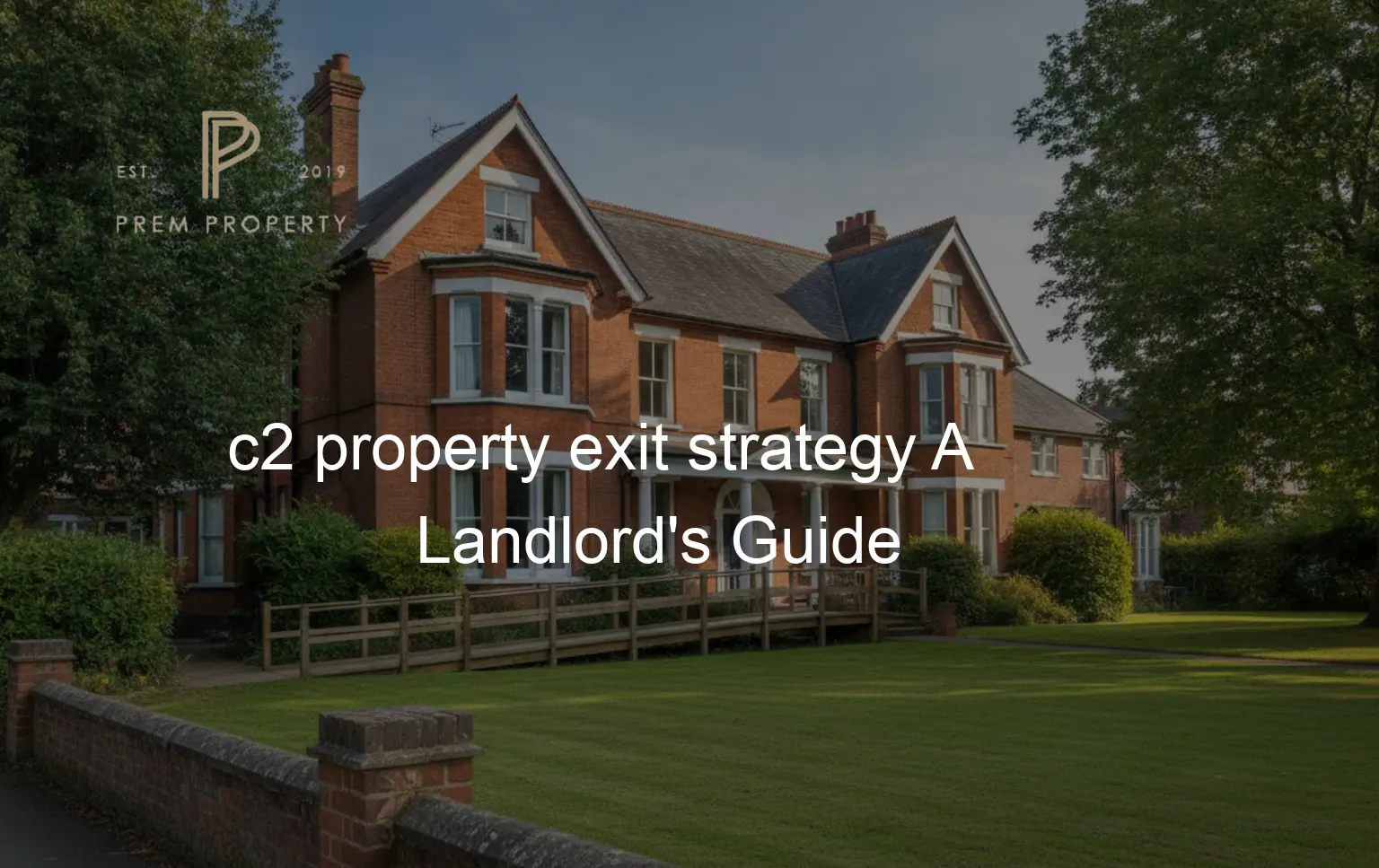
A c2 property exit strategy involves planning how to sell or repurpose a residential institution like a care home. The main options for landlords are selling the property tenanted to an investor, selling it with vacant possession to another operator or applying for planning permission to revert its use class to a standard C3 dwelling.
As a landlord of a C2 property, you will eventually need to consider your exit. Whether you are approaching retirement, looking to rebalance your investment portfolio or nearing the end of a long lease with a care provider, having a clear plan is essential. A well-considered c2 property exit strategy can maximise your return and ensure a smooth transition.
This guide explores the primary exit routes available to owners of C2 residential institutions. We will compare the processes for selling a tenanted property, selling with vacant possession and reverting the building back to standard residential use, helping you make an informed decision for your asset.
This article is for general guidance only and does not constitute legal, planning, financial or fire safety advice. You should always seek independent professional advice before making any decisions about your property.
What Are Your Options for a C2 Property Exit?
First, it is useful to understand what a C2 property is. The C2 use class covers residential institutions, which provide residential accommodation and care to people in need. This includes properties used as care homes for adults, which are regulated by the Care Quality Commission (CQC) and properties set up as a residential children’s home, regulated by Ofsted.
When the time comes to move on from your investment, you have three primary paths to consider for your c2 property exit strategy. Each has distinct advantages, challenges and financial implications.
Your main options are:
- Selling the property as a going concern: This means selling it with the current care provider tenant and lease agreement in place.
- Selling with vacant possession: This involves selling the empty property, either to another care provider or for an alternative commercial use.
- Reverting the use class: This path involves applying for planning permission to change the property from C2 back to a C3 dwellinghouse for sale on the open residential market.
How Should You Assess Your C2 Property and Lease?
Before you can choose the best c2 property exit strategy, you need a clear picture of your asset’s current legal and financial standing. This involves a thorough review of your lease agreement and a realistic valuation of the property under different scenarios.
Reviewing Your Commercial Lease
The starting point for any landlord is to understand the terms of the current lease with your care provider tenant. This document governs your relationship and dictates many of your options. Pay close attention to key clauses such as the remaining lease term, any break clauses for either party and the tenant’s repair obligations.
Many commercial leases for care homes are Full Repairing and Insuring (FRI) leases. In these agreements, the tenant is responsible for all costs of repair, maintenance and insurance. Understanding these obligations is vital as they affect the property’s condition and appeal to potential buyers.
Determining Your Property’s Value
A professional C2 property valuation is crucial. It is important to recognise that your property has two potential values. The first is its value as a commercial investment, which is heavily influenced by the rental income it generates. Factors here include the length of the lease, the rent amount and the tenant’s covenant strength, which is their financial stability and ability to meet their obligations.
The second is its potential value as a vacant residential property, assuming you can secure a change of use. This value will be based on comparable house prices in your local area, such as in the West Midlands or Greater London, but must be weighed against the costs and risks of the planning process. Seeking a chartered surveyor with experience in both commercial and residential property is advisable.

What Does Selling a Tenanted C2 Property Involve?
One of the most direct options is Selling a tenanted property. This approach involves transferring your freehold interest to a new owner who will become the care provider’s new landlord. This is often the preferred c2 property exit strategy for investors seeking a simple transition.
Pros and Cons
The main benefit of this strategy is the continuity of rental income right up to the day of completion. There is no void period, providing financial stability. The property will appeal to a specific market of commercial property investors who are looking for secure, long-term income streams and are comfortable with the C2 asset class.
However, the pool of potential buyers is smaller than for a standard residential property. The sale’s success is also heavily dependent on the quality of your tenant. A financially stable tenant with a long lease and a good regulatory history with the CQC or Ofsted makes the investment far more attractive. Conversely, a tenant with a short lease remaining or a poor track record can make a sale very difficult.
The Sales Process
The process involves marketing the property as a commercial investment opportunity through specialist agents. Prospective buyers will conduct extensive due diligence. They will scrutinise the lease agreement, the tenant’s financial accounts and their inspection reports from regulators like Ofsted. A key part of a successful sale is having all the necessary documentation ready for the due diligence they will perform on the lease and tenant.
What is the Process for Selling with Vacant Possession?
An alternative c2 property exit strategy is selling with vacant possession. This is only possible if your tenant’s lease has come to an end or if you negotiate an early surrender of the lease. This route opens the property up to a different set of buyers.
With an empty property, you can market it to other care providers who may wish to run their own service from the building. It also allows you to sell to buyers interested in alternative commercial uses, subject to planning permission. This widens the potential buyer pool compared to a tenanted sale.
The major drawback is the immediate loss of rental income, creating a void period that could last for many months. The asking price can also be affected. While some operators may pay a premium for a vacant property in a prime location, the lack of guaranteed income can sometimes result in a lower valuation compared to a securely tenanted investment.

How Do You Revert a Property from C2 to C3 Use Class?
Perhaps the most complex c2 property exit strategy is to change the property’s use class from C2 back to C3. A C3 property is a standard dwellinghouse, which opens your asset up to the much larger and often more liquid residential sales market.
The Planning Application Process
Changing a property’s use from C2 (Residential institutions) to C3 (Dwellinghouses) is considered a ‘material change of use’ and requires a planning application to be made to the local planning authority. You can find guidance on applying for planning permission and submit applications through The Planning Application Process portal. It is advisable to contact the local authority directly, as they can provide specific advice on their policies and procedures; note that some may charge for this pre-application advice.
Local authorities will consider several factors. They may have policies to protect community facilities and may resist the loss of a care home if there is a demonstrated local need. Your application will need to argue why the change is appropriate. The process can be lengthy and success is not guaranteed.
Financial and Practical Considerations
Pursuing this c2 property exit strategy involves significant costs. These include planning application fees, fees for professional advice from planning consultants and architects and potentially substantial conversion costs. The property will likely need physical alterations to become suitable for residential use as a family home, which may also require necessary conversion work and building regulations approval.
While the potential final sale price on the residential market may be higher, these upfront costs and the uncertainty of the planning outcome make it a higher-risk option. Understanding the potential Financial and Practical Considerations is essential before you commit.
How to Choose the Right C2 Exit Strategy for You
Choosing the right c2 property exit strategy depends entirely on your personal circumstances and financial goals. There is no single best answer. You should consider your appetite for risk, your desired timeline and the specific conditions of your property and the local market.
To help you decide, here is a simple comparison of the three main strategies:
| Factor | Sell Tenanted | Sell Vacant | Revert to C3 |
|---|---|---|---|
| Potential Value | Based on yield and tenant quality | Variable, depends on demand from operators | Potentially highest, but with high upfront costs |
| Speed of Sale | Can be moderate, smaller buyer pool | Can be slow due to void period | Slowest, due to planning and conversion |
| Complexity | Low to moderate | Moderate | High, involves planning process |
| Risk | Low, income is continuous | Moderate, risk of a long void period | High, planning permission is not guaranteed |
Ultimately, a careful assessment of your property and lease, combined with professional advice, will guide you to the most suitable c2 property exit strategy for your investment.
Common Mistakes to Avoid
Navigating your c2 property exit strategy can be complex. Here are some common pitfalls to avoid:
- Poor Record Keeping: Failing to have all lease documents, compliance certificates and tenant communications in order can delay or jeopardise a sale.
- Ignoring the Tenant: If selling tenanted, maintaining a good relationship with your care provider is crucial. Their cooperation is needed for viewings and providing information to buyers.
- Underestimating Conversion Costs: When considering a change to C3, it is vital to get realistic quotes for the physical work required to make the property a marketable home.
- Misunderstanding the Planning Process: Assuming a change of use to C3 will be straightforward is a frequent error. Each local authority has different priorities and policies.
Could Professional Management Be an Alternative?
If an immediate exit is not essential or if you want to strengthen your asset before a sale, professional property management can be a valuable option. For landlords with suitable C2 properties, working with a specialist organisation like Prem Property can provide stability and reduce management burdens.
Our guaranteed rent solutions can offer secure rental income, which can be particularly useful if you are facing uncertainty with a current tenant or an upcoming lease expiry. This can provide the breathing space needed to plan your long-term c2 property exit strategy without the pressure of a void period. Professional management ensures the property remains compliant and well-maintained, making it a more attractive asset when you do decide to sell.
When to Get Professional Advice
Executing any c2 property exit strategy successfully requires a team of professionals. It is not a journey to undertake alone. You should consider seeking advice from:
- A Commercial Property Solicitor: They are essential for reviewing leases, negotiating a lease surrender and handling the legalities of the sale.
- A Chartered Surveyor: They can provide accurate valuations for the property as both a commercial investment and a potential residential dwelling.
- A Planning Consultant: If you are considering reverting to C3, a planning consultant can assess the likelihood of success and manage the application process on your behalf.
- A Commercial Property Agent: A specialist agent will have access to the right network of investors or operators to market your property effectively.
- A Tax Advisor: They can provide guidance on the Capital Gains Tax implications of the sale and any potential reliefs you may be eligible for.

Key Takeaways
- A c2 property exit strategy is a vital plan for any landlord of a residential institution like a care home.
- Your three main options are selling with a tenant in place, selling the property vacant or applying to change the use class to residential (C3).
- A thorough review of your lease agreement and a professional valuation are the essential first steps.
- Selling a tenanted property offers income continuity but has a smaller buyer pool.
- Reverting to C3 use opens up the residential market but involves a complex, costly and uncertain planning process.
- The best strategy depends on your financial goals, timeline and risk tolerance.
- Always seek independent professional advice from solicitors, surveyors and planning consultants.
Frequently Asked Questions
How is a C2 care home property valued for sale?
A C2 property is typically valued as a commercial investment based on the rental income (yield). The valuation considers the lease length, rent amount and the tenant’s financial stability. It can also be valued based on its potential as a vacant residential property, subject to a change of use.
Can I sell my C2 property before the care provider’s lease ends?
Yes, you can sell the property with the tenant and lease in place. The new owner simply becomes the tenant’s landlord under the existing terms. This is a common c2 property exit strategy for investors.
Is it difficult to get planning permission to change a C2 property back to C3?
It can be challenging. Local authorities may have policies to prevent the loss of community facilities like care homes, especially if there is a local need. Success is not guaranteed and seeking advice from a planning consultant is highly recommended before pursuing this c2 property exit strategy.
What are the main challenges when selling a tenanted care home?
The main challenges are the smaller pool of specialist buyers and the sale’s dependency on the tenant’s quality. A buyer will perform extensive due diligence on the tenant’s financial health and regulatory record, so a strong tenant is key to a successful sale.
Do I have to pay Capital Gains Tax when selling a commercial C2 property?
In most cases, the sale of a commercial property that has increased in value will be subject to Capital Gains Tax. The specific rules and any available reliefs can be complex. You should always seek advice from a qualified tax advisor or accountant to understand your specific liabilities.
Related Prem Property Reading
UK Guidance and Further Reading
Final Thoughts
Developing a successful c2 property exit strategy requires careful planning, thorough assessment and expert guidance. By understanding the pros and cons of selling tenanted, selling vacant or reverting the use class, you can align your approach with your long-term financial objectives. Each path presents its own opportunities and challenges and the right choice will depend on your unique circumstances.
If you are considering your options or need support managing your C2 property while you plan your next steps, we can help. Discuss Your Property With Prem Property to learn more about our services for landlords of specialist residential properties.