
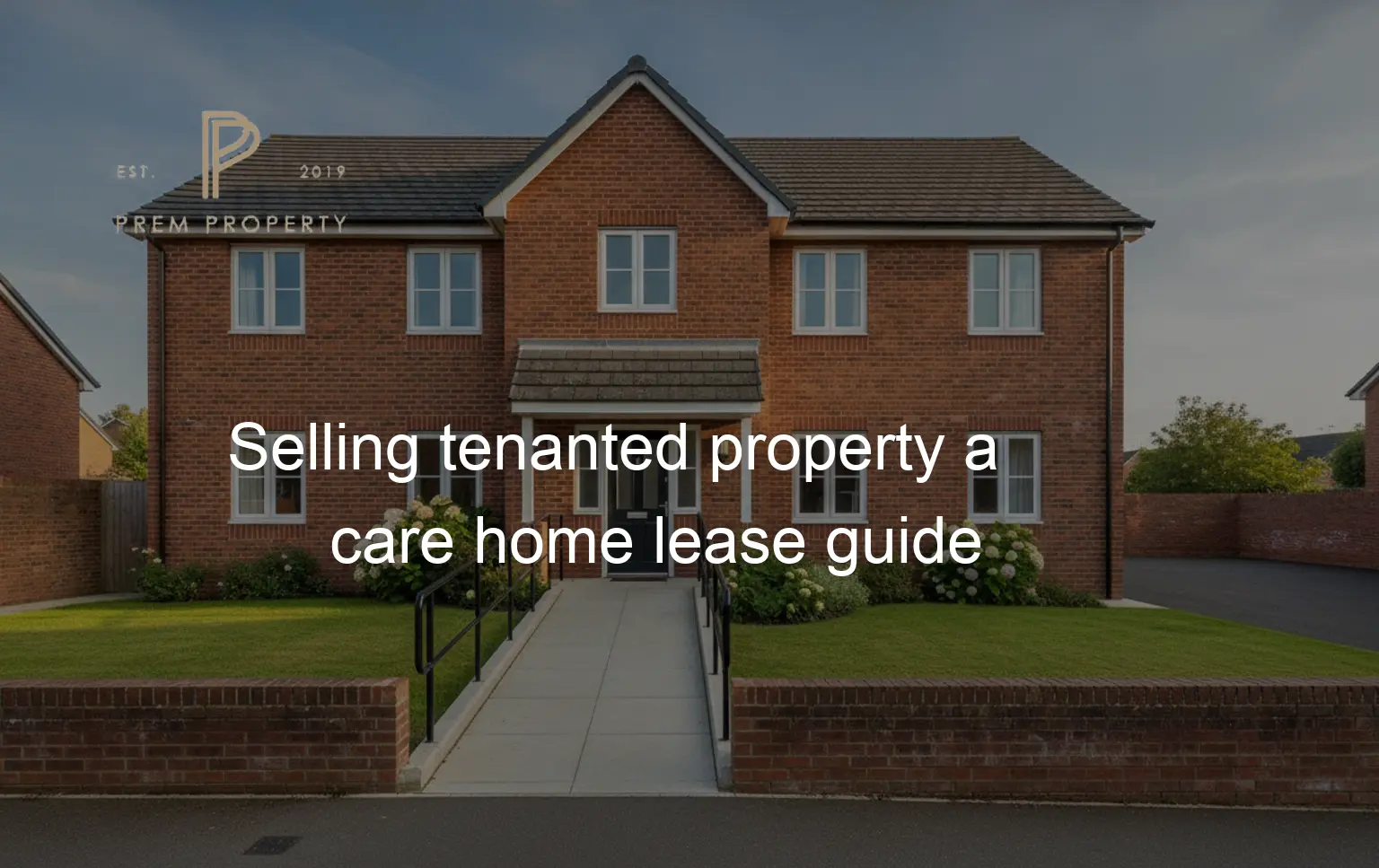
Selling tenanted property with a commercial care provider in place is a process focused on the investment value, which is determined by the lease terms, rental income and tenant quality. Unlike a vacant sale, the transaction involves transferring the existing lease to a new owner who is buying the property for its secure, long-term income stream.
If you own a property leased to a residential care or children’s home provider, you may be considering your options for a sale. The process of selling a property with tenants in situ, particularly on a commercial lease, differs significantly from a standard residential sale. This guide provides a clear roadmap for landlords, property owners and investors considering a C2 property investment sale.
This article is for general guidance only and does not constitute legal, financial, planning or fire safety advice. You should always seek professional advice from a qualified solicitor, surveyor or tax advisor before making any decisions.
Why Selling a Property Leased to a Care Provider is a Unique Opportunity
When you begin the process of selling tenanted property, it’s crucial to understand you are not just selling bricks and mortar. You are selling a stable, income-generating asset. For investors, a property with a reliable care provider on a long commercial lease is highly attractive. It offers a predictable income stream in a sector with consistent high demand, providing a level of security that is hard to find elsewhere.
This contrasts sharply with selling a property let on a standard Assured Shorthold Tenancy (AST). Residential tenancies are typically shorter, have different legal frameworks and can be subject to more frequent void periods. While there are clear Assured Shorthold Tenancy rights, the commercial lease of a care property offers a different proposition for buyers focused on long-term returns. Investors are drawn to the hands-off nature of these assets, especially when the lease terms are favourable. For more insights, our care home investment tips offer further reading on what makes this sector appealing.
Step 1 What Should I Check in My Commercial Lease Agreement?
The lease is the single most important document in the sale. It dictates the value of your investment and the terms under which the new owner will take over. Before you even think about marketing, a thorough review is essential.
Understanding the Lease Terms
Your buyer is purchasing an income stream defined by the lease. You must be intimately familiar with its contents, including the rent amount, the schedule for rent reviews and any clauses relating to maintenance or use of the property. A clear and well-drafted lease makes the property far more appealing to a potential buyer. Our care property lease guide provides more detail on what to look for.
The Role of an FRI Lease
Many commercial properties in the care sector are let on a Full Repairing and Insuring (FRI) lease. This means the tenant is responsible for all costs of repair, maintenance and insurance for the property. A Full Repairing and Insuring (FRI) lease is highly desirable for investors as it creates a passive, hands-off investment with minimal ongoing costs for the landlord.
Break Clauses and Lease Duration
The remaining length of the lease is a primary driver of the property’s value. A longer term, often referred to as the ‘unexpired term’, provides greater security for the buyer and will command a higher price. Conversely, a lease with only a few years remaining may be harder to sell. You should also check for any break clauses that would allow the tenant to terminate the lease early, as these can impact an investor’s confidence.

Step 2 How Do I Value My Tenanted Care Property?
Valuing a tenanted commercial property is different from valuing a vacant house. The primary valuation method is based on the rental yield, which is the annual rental income expressed as a percentage of the property’s value. The strength of this yield is influenced by several key factors.
The quality and financial stability of the care provider tenant are paramount. An established operator with a strong track record is a lower risk for an investor. Performing your own due diligence on a care provider tenant is a good first step. Other factors include the length of the lease, the property’s condition and its location. A property in a high-demand area like Greater London or the West Midlands may achieve a more competitive yield. It is highly recommended to get a formal valuation from a chartered surveyor with experience in the care sector.
Valuation Methods Compared
| Factor | Vacant Residential Property | Tenanted Commercial Care Property |
|---|---|---|
| Primary Basis | Comparable sales of similar properties in the area. | Rental income and investment yield. |
| Key Influences | Condition, size, location, market sentiment. | Lease length, tenant quality, rent review terms, sector demand. |
| Buyer Type | Owner-occupiers or buy-to-let landlords. | Institutional investors, pension funds, high-net-worth individuals. |
Step 3 What Are My Legal Obligations When Selling Tenanted Property?
When selling tenanted property, you have legal and contractual obligations to your tenant that must be respected throughout the process. Maintaining a positive and professional relationship with the care provider is vital for a smooth transaction.
Informing Your Tenant
Your lease agreement may contain specific clauses about how and when you must inform the tenant of your intention to sell. Even if it doesn’t, open communication is best practice. Reassure the provider that the sale does not affect their tenancy and that their business operations will continue as normal under the new landlord.
Arranging Viewings
Viewings must be arranged with reasonable notice and conducted in a way that causes minimal disruption to the residents and staff. A care home is a sensitive environment, so flexibility and discretion are key. Working collaboratively with the home’s manager will ensure viewings are handled professionally.
The Transfer of the Lease
Upon completion of the sale, the existing lease simply transfers to the new property owner. The tenant’s rights and obligations remain unchanged, as do the landlord responsibilities in a care home lease, which now fall to the buyer. You should seek legal advice on the formal process of transferring a commercial lease to ensure all legal requirements are met. You should also consult a solicitor regarding any potential ‘right of first refusal’ under the Landlord and Tenant Act 1987, as its applicability can be complex.

Step 4 How Do I Market My Property to the Right Investors?
Marketing a C2 property investment requires a targeted approach. Your potential buyers are not browsing standard property websites; they are sophisticated investors looking for specific types of assets. The audience often includes pension funds, institutional investors and high-net-worth individuals who are actively seeking secure, long-term income.
To attract these buyers, you must prepare a comprehensive sales pack. This professional presentation is crucial and should contain all the information an investor needs to make an informed decision. Using a specialist commercial agent who understands this niche market can be invaluable. They will have a network of qualified buyers and can ensure your property is presented to the right people, increasing your chances of a successful sale.
Your sales pack should typically include:
- A full copy of the commercial lease agreement.
- Details of the current rental income and any upcoming rent reviews.
- Information about the tenant, including their trading history.
- Relevant compliance documents, such as electrical and gas safety certificates.
- Planning permission documents related to the property’s use class. You can find official guidance on when planning permission is required on the government’s website.
- Evidence of compliance with building regulations, which can be understood via the Building regulations approval process.
- Fire safety documentation, which is governed by laws like The Regulatory Reform (Fire Safety) Order 2005.
What Are the Common Challenges When Selling a Leased Care Property?
While selling tenanted property in the care sector is often a stable investment, certain challenges can arise. A short remaining lease term can deter investors seeking long-term security. In this situation, you might consider approaching the tenant to negotiate a lease extension before going to market. Another potential issue is a tenant experiencing financial difficulty. Buyers will investigate the tenant’s accounts via the Companies House service, so transparency is key.
The operational quality of the care provider also has a direct impact. A poor rating from the Care Quality Commission (CQC) for an adult care home or negative Ofsted inspection reports for a children’s home can significantly reduce investor confidence. A buyer will view a poorly-rated tenant as a risk to the continuity of their rental income. Understanding the details of a CQC care home inspection can help you appreciate its importance. If the property itself requires significant repairs not covered by the lease, this will also need to be factored into the asking price. Being aware of the common problems with leasing to care providers can help you prepare for these conversations.

How a Specialist Partner Simplifies the Sale Process
The process of selling a tenanted care property is more complex than a standard residential transaction. It requires an understanding of commercial leases, property investment metrics and the specific regulations of the care sector. Navigating this alone can be challenging and may result in a lower sale price or a delayed completion.
Working with a specialist partner like Prem Property can provide valuable expertise. Our experience with C2 residential care properties means we understand what investors are looking for and how to position your property to achieve its maximum value. We can help you prepare for the sale and connect you with a network of serious, qualified buyers who are actively seeking assets like yours. This specialist approach helps ensure a smoother and more efficient transaction.
Key Takeaways
- Selling tenanted property with a care provider is an investment sale, valued primarily on rental yield and tenant quality.
- The commercial lease is the most important document, with the remaining term and FRI clauses being critical to the property’s value.
- Valuation is based on the income stream, not just comparable local property prices.
- Maintaining a good relationship with your tenant is essential for a smooth process, especially regarding viewings.
- Marketing should be targeted at institutional investors and high-net-worth individuals through specialist channels.
- Challenges like a short lease or a poor CQC or Ofsted rating for the tenant can impact value and must be addressed proactively.
Frequently Asked Questions
Can I sell my property in the middle of a commercial lease with a care provider?
Yes, you can. The process involves selling the property with the tenant and their lease in place. The new owner becomes the new landlord and the terms of the existing lease remain in force, making the process of selling tenanted property a transfer of an investment.
Do I have to give my care provider tenant the first option to buy the property?
This depends on the specific circumstances and legal structure of the property. While some residential tenants have a ‘right of first refusal’ under certain conditions, the rules for commercial properties can be different. You should always seek legal advice from a solicitor to understand your specific obligations.
How is a tenanted care property valued for sale?
It is valued primarily as a commercial investment. The key factors are the annual rental income, the length of the lease and the financial strength of the tenant. The final value is often expressed as a yield, which is the rental income as a percentage of the sale price.
What documents do I need to sell a property with a tenant in situ?
You will need a comprehensive sales pack. This should include the full lease agreement, details of the rental income, compliance certificates (gas, electric, fire safety), planning permissions for its C2 use and information about the tenant. Preparing these documents is a key part of selling tenanted property effectively.
Will selling the property disrupt the care home’s services?
It shouldn’t. The sale is of the property asset and the care provider’s business should continue to operate without interruption. It is important to manage viewings sensitively and maintain clear communication with the tenant to ensure there is minimal disruption to the residents and staff.
Related Prem Property Reading
UK Guidance and Further Reading
- The Town and Country Planning (Use Classes) Order
- fire safety risk assessment for residential care premises
- The Planning Portal
- guidance on registering a children’s home
Final Thoughts
The process of selling tenanted property leased to a care provider is a specialised transaction that rewards careful preparation and a deep understanding of the market. By focusing on the strength of your lease, the quality of your tenant and the investment potential of your asset, you can position your property to attract the right buyers. A successful sale depends on presenting a secure, income-generating opportunity to a market of sophisticated investors.
If you are considering selling tenanted property and want to understand its potential value, our team has the specialist expertise to guide you. Discuss Your Property With Prem Property today to learn more about how we can assist you.