
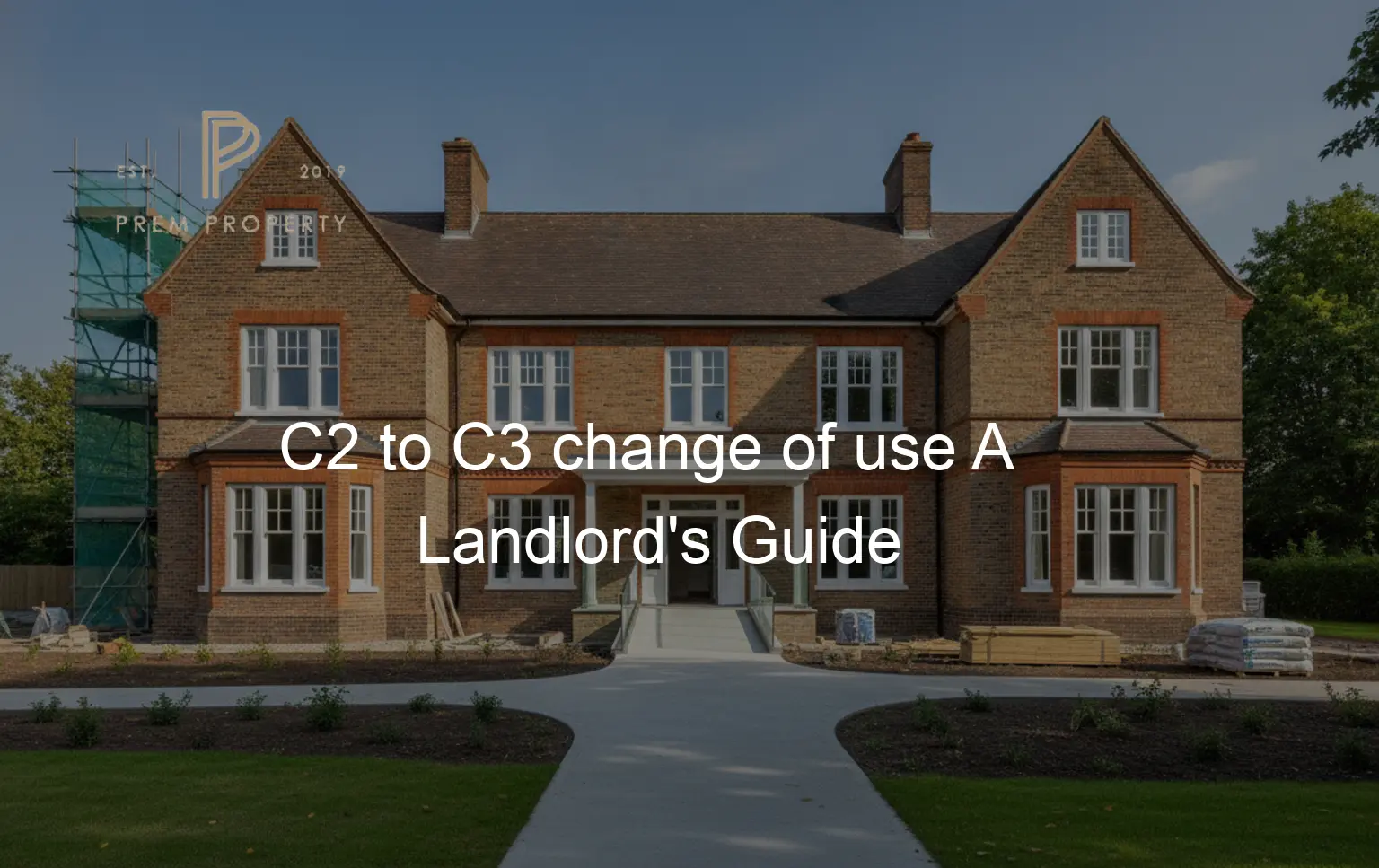
A C2 to C3 change of use is the planning process of converting a property from a Use Class C2 ‘Residential Institution’ such as a care home into a Use Class C3 ‘Dwellinghouse’ for standard residential occupation. This conversion almost always requires a full planning application to the local authority.
Introduction Planning Your C2 Property’s Next Chapter
As a landlord with a C2 property, you may be considering your next steps, especially if a lease with a care provider is ending or local market dynamics are changing. When a specialist tenancy concludes, finding a new provider isn’t always straightforward. In these situations, planning for a C2 property exit strategy becomes essential.
A c2 to c3 change of use offers a viable route to return your property to the mainstream residential market, potentially increasing its value and widening its appeal. This article will guide you through the key considerations for this process, from understanding the planning system to managing the physical conversion. At Prem Property, we specialise in helping landlords manage and evaluate their C2 property investments, ensuring you make informed decisions about your asset’s future.
This article provides general guidance for informational purposes only and does not constitute legal, planning, financial or fire safety advice. You should always seek independent professional advice tailored to your specific circumstances before making any decisions.
What Are Use Classes C2 and C3?
The UK planning system categorises how buildings are used to control local development. These categories are defined in The Town and Country Planning (Use Classes) Order. Understanding the difference between C2 and C3 is the first step in any potential conversion.
A property with What Is a C2 Property use is defined as a ‘Residential Institution’. This includes properties providing residential accommodation and care to people in need. Examples include:
- Care homes and nursing homes for adults
- Residential children’s homes
- Hospitals and boarding schools
Use Class C3, ‘Dwellinghouses’, covers standard residential use. This class is split into three parts:
- C3(a) covers use by a single person or a family.
- C3(b) covers up to six people living together as a single household and receiving care, such as supported living.
- C3(c) allows for up to six people living together as a single household, which can cover smaller HMOs (Houses in Multiple Occupation).
The fundamental difference is that C2 use involves an element of institutional care for residents, whereas C3 is for private residential living. This distinction is crucial when considering a c2 to c3 change of use, as it involves removing the ‘care’ element from the property’s legal definition.
Why Convert a C2 Property Back to a C3 Dwelling?
While the process of converting a C3 Dwelling to a C2 institution is common, the reverse journey is just as important for landlords planning an exit. There are several strategic reasons why a c2 to c3 change of use might be the right move for your property.
End of a Care Provider Lease
Many C2 properties are operated under long-term leases with specialist care providers. When this lease ends and isn’t renewed, you are left with a vacant, highly specialised property. A c2 to c3 change of use allows you to repurpose the building for the much larger private rental or sales market, reducing potentially long void periods while you search for another C2 tenant. It also simplifies your Landlord responsibilities in a care home lease, which can be extensive.
Maximising Value for a Residential Sale
The market for C2 properties is niche, typically limited to care providers, specialist investors and housing associations. By converting the property back to a C3 dwelling, you significantly broaden the pool of potential buyers to include the general public. A standard family home is often easier to value and sell than a decommissioned care facility. Considering the complexities of Selling a property with a care home lease, an empty C3 property can be a much more straightforward asset to liquidate.
Adapting to Shifting Local Market Demand
Property markets are not static. In areas with high residential demand, such as Greater London, the Home Counties or parts of the West Midlands, a C3 dwelling may be a more profitable and liquid asset. Local care home occupancy and demand may fluctuate, but the need for quality housing is often constant. A c2 to c3 change of use allows you to adapt your investment to meet current market needs, potentially yielding better returns.
What is the Planning Process for C2 to C3 Change of Use?
Navigating the planning system is the most critical part of a c2 to c3 change of use. Unlike some other conversions, this is not a simple administrative task and requires formal approval from your local planning authority.
Is Planning Permission Always Required?
In almost all circumstances, a full planning application is required for a c2 to c3 change of use. This type of conversion is not covered by Permitted Development Rights, which are national grants of planning permission that allow for certain changes of use without a full application. The official government guidance on When planning permission is required makes it clear that material changes of use need consent.
The General Permitted Development Order, which lists these rights, does not include a provision for C2 to C3. Therefore, you should always assume a full application is necessary. We strongly advise you to seek pre-application advice from your local council or a planning consultant to confirm the specific requirements in your area.
Submitting a Full Planning Application
A full planning application is a detailed submission to your local council. The process generally follows these steps:
- Pre-Application Advice: Engage with your local planning authority to discuss your proposal. They can provide initial feedback on the likelihood of success and highlight key policies you need to address.
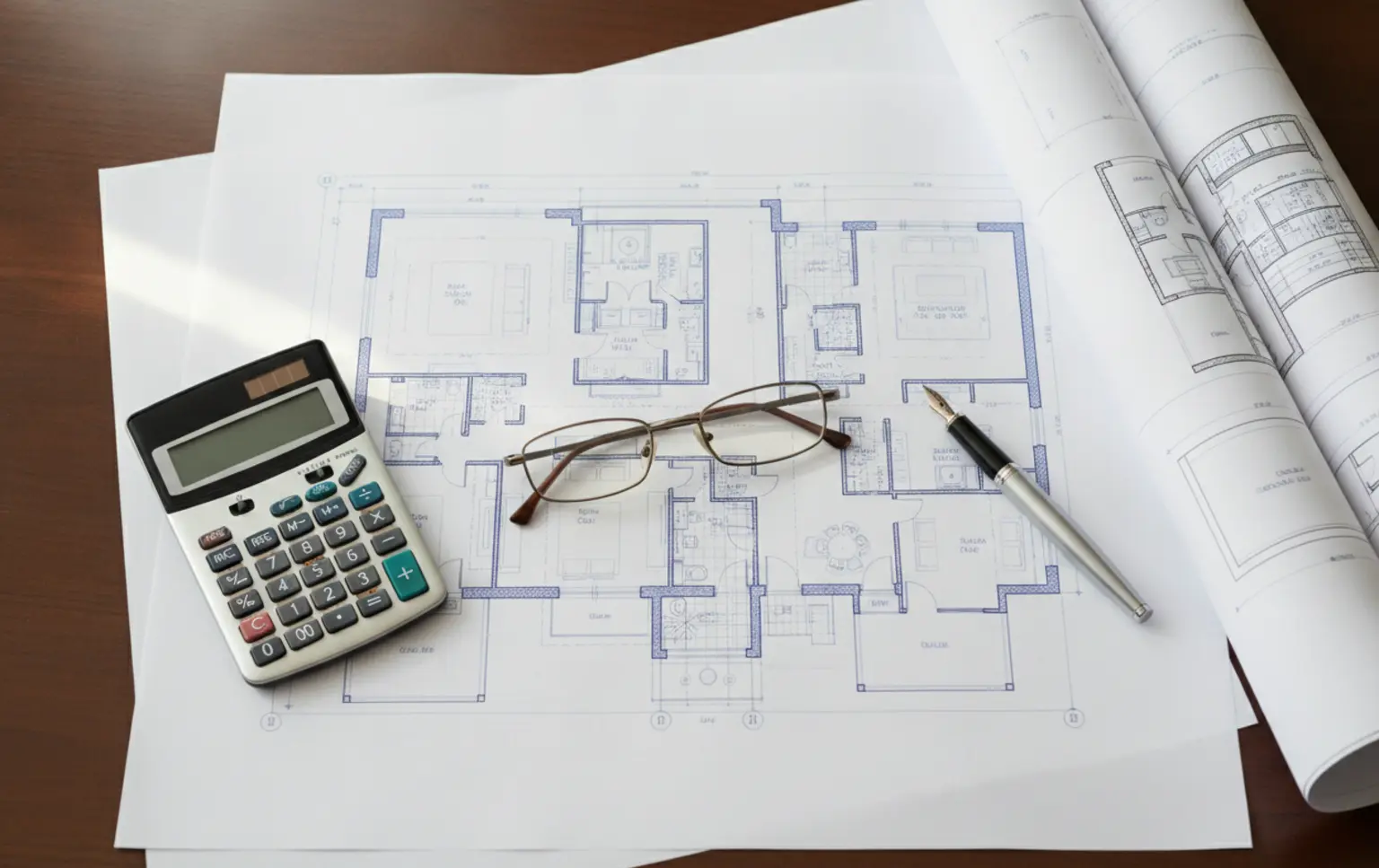
- Prepare Supporting Documents: You will need to commission documents such as existing and proposed floor plans, site plans, a Design and Access Statement and a Planning Statement.
- Form Submission: Complete the relevant application forms and submit them, along with your supporting documents and the application fee, via the Make a planning application online portal.
- Validation and Consultation: The council will validate your application and begin a consultation period where neighbours and statutory bodies can comment.
- Decision: A planning officer will assess your application against local and national policies and make a recommendation. A decision is typically made within 8-13 weeks, but complex cases can take longer.
Key Evidence Your Local Authority Will Need
When assessing a c2 to c3 change of use application, councils are primarily concerned with the loss of a community facility. You will likely need to provide evidence to justify the change. Key factors they consider include:
- Loss of a Community Facility: You may need to demonstrate that there is no longer a need for the C2 facility in that location or that the existing use is no longer viable. This could involve marketing the property for C2 use for a set period to prove a lack of demand.
- Local Housing Need: The application should highlight how the conversion will contribute to the local housing supply, aligning with the council’s housing targets.
- Previous Planning Conditions: Check if any historical planning permissions placed restrictions on the property, preventing it from being used for anything other than a C2 purpose.
For more detailed information, the Planning Portal guide to change of use is a useful starting point.
What Building Regulations and Physical Works are Involved?
Securing planning permission is only half the battle. A c2 to c3 change of use also requires physical alterations to make the building suitable for residential living, all of which must comply with Building Regulations.
Decommissioning Specialist Systems
C2 properties are equipped with commercial-grade systems that are unnecessary or unsuitable for a C3 dwelling. This includes:
- Fire Safety Systems: Complex, hard-wired fire alarm systems, emergency lighting and fire doors may need to be removed or downgraded to meet domestic standards. The government’s guidance on Fire safety in residential care premises outlines the C2 requirements you will be moving away from. Our Care Home Fire Safety Guide also offers context.
- Accessibility Features: While some accessibility is a bonus, features like ceiling track hoists, numerous grab rails or institutional-style wet rooms may need to be removed for aesthetic and practical reasons.
- Other Systems: Nurse call systems, commercial kitchens and specialist laundry facilities will need to be decommissioned and removed.
Reconfiguring Internal Layouts
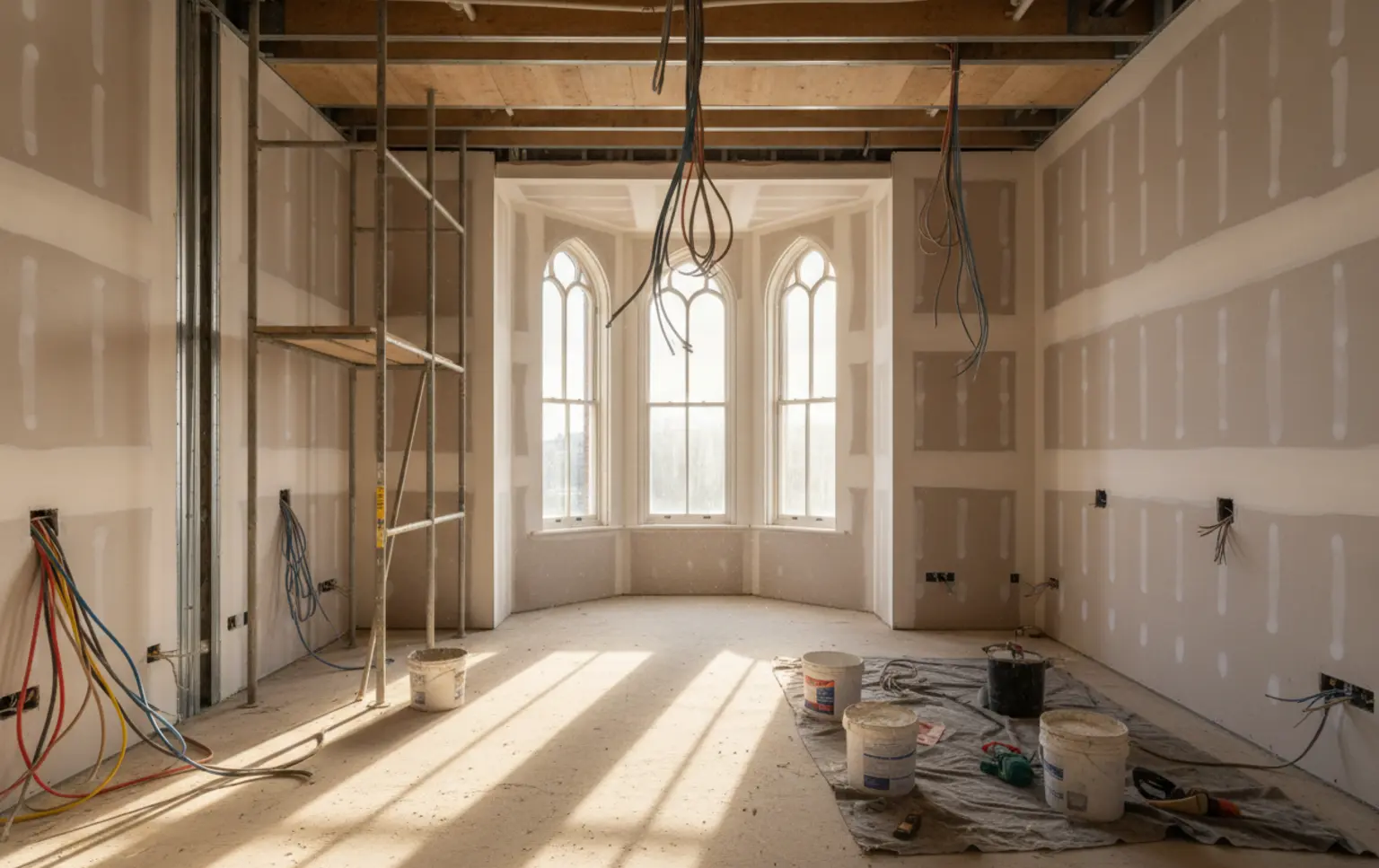
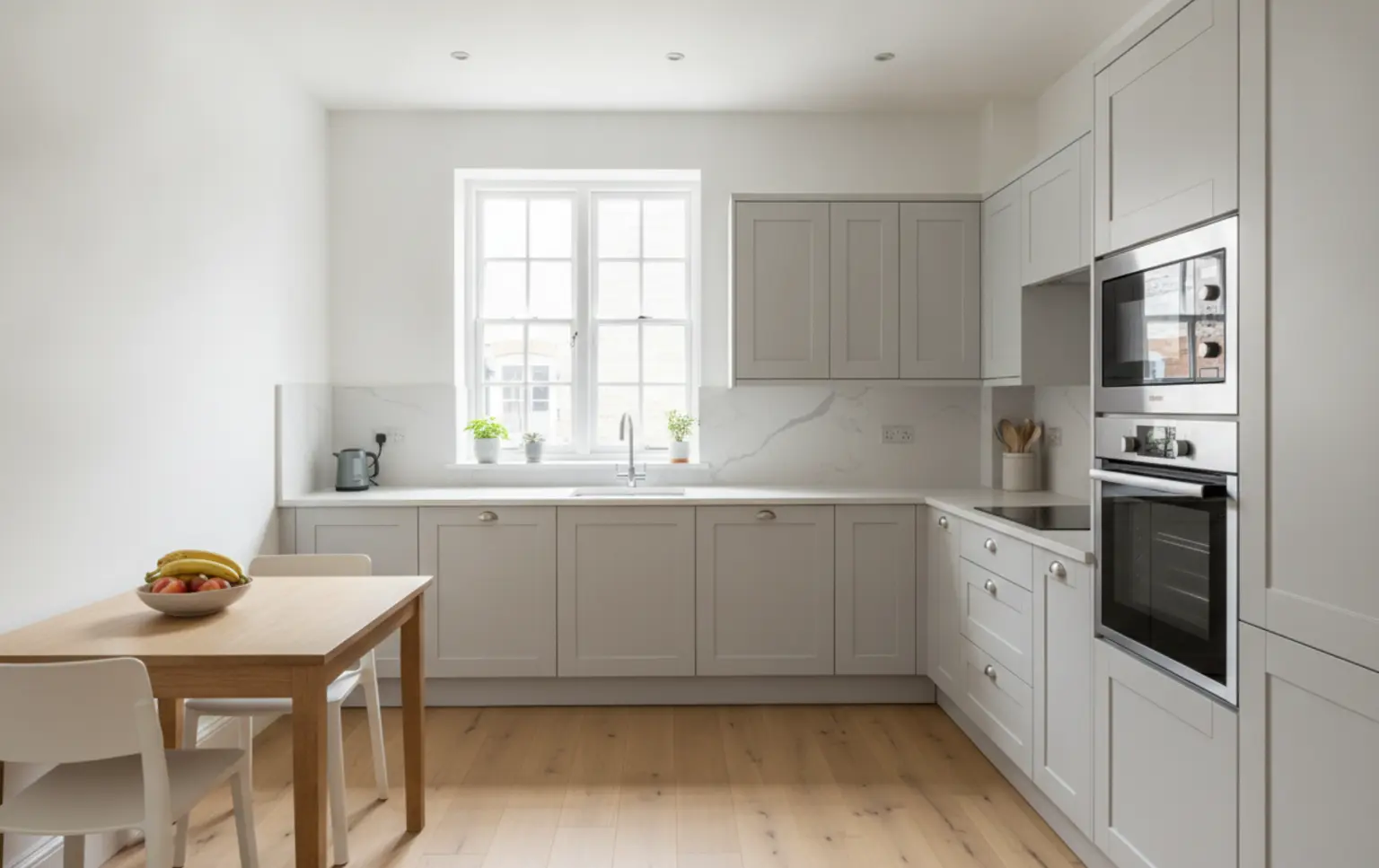
The layout of a care home is very different from a family home. A key part of the care home to residential conversion involves reconfiguring the space. This often means converting several small, en-suite bedrooms into fewer, larger bedrooms and transforming communal lounges or dining areas into a family living room or kitchen-diner. These structural changes will require careful design and will be subject to Building regulations approval guidance.
Ensuring Compliance for a Dwellinghouse
All works must ensure the finished property complies with Building Regulations for a C3 dwelling. This covers everything from structural stability and fire safety to ventilation, energy efficiency and drainage. For example, the electrical systems will need to meet the Electrical safety standards for rented homes if you plan to let the property. Understanding the original requirements detailed in our guide to Building Regulations for Change of Use to C2 can help you identify what needs to be reversed.
What are the Financial and Tax Implications?
A c2 to c3 change of use is a significant project with several financial considerations. Budgeting accurately from the outset is crucial for a successful conversion.
Potential costs to factor in include:
- Professional Fees: Costs for a planning consultant, architect, structural engineer and solicitor.
- Application Fees: Fees payable to the local authority for the planning application and building control inspections.
- Conversion Works: The cost of labour and materials for all physical alterations, from demolition to decoration. How VAT on buildings and construction applies can be complex, so professional advice is recommended.
- Financing Costs: If you are borrowing to fund the project, you will need to account for interest and fees.
One key administrative change is the transition from Business Rates, which typically apply to C2 properties, to Council Tax for C3 dwellings. You will need to inform the Valuation Office Agency (VOA) and your local council once the property is converted and ready for residential occupation. They will then assess the property and assign it a Council Tax band. It is advisable to contact your council for guidance on their specific process.
Finally, converting and then selling the property could have an impact on your Capital Gains Tax liability. The costs of the conversion works can often be deducted from the gain, but this is a complex area. We strongly advise speaking to an accountant or tax advisor to understand your specific position.
Common Mistakes and Myths in C2 to C3 Conversions
The path of a c2 to c3 change of use has several potential pitfalls. Being aware of common misconceptions can help you avoid costly errors.
| Feature | Use Class C2 (Residential Institution) | Use Class C3 (Dwellinghouse) |
|---|---|---|
| Primary Purpose | Accommodation with an element of care | Standard residential occupation |
| Typical Occupants | Residents needing care, students | A single person, a family or up to 6 people |
| Local Taxation | Business Rates | Council Tax |
| Planning Status | Commercial / Sui generis elements | Residential |
| Mortgage Type | Commercial mortgage | Residential mortgage |
- Myth: It’s covered by Permitted Development. As discussed, this is incorrect. Assuming you can convert without permission is the biggest mistake a landlord can make, leading to enforcement action.
- Mistake: Underestimating council opposition. Councils are often protective of community facilities. Failing to build a strong case for why the C2 use is no longer viable is a common reason for refusal.
- Myth: The physical conversion is just cosmetic. The work required to change a property from institutional to domestic standards is substantial, involving plumbing, electrics and structural changes.
- Mistake: Ignoring the marketing evidence requirement. Some councils will not approve a c2 to c3 change of use unless you can prove you have actively marketed the property for its existing C2 use for a specific period (e.g. 12 months) without success.
How Guaranteed Rent Can Support Your Property Strategy
For landlords who own properties suitable for specialist supported living or residential care, a c2 to c3 change of use is just one option. An alternative is to partner with a specialist provider like Prem Property to secure a new, long-term C2 or similar tenancy.
Our guaranteed rent solutions offer landlords a way to achieve secure rental income while reducing management stress and minimising void periods. We work with housing providers to create sustainable property partnerships, matching suitable properties with their needs. While no arrangement can remove all investment risk, this can be an effective way to maintain your property’s C2 status and generate a consistent return without the hassle of a full conversion.
If your property is located in the Midlands or Greater London, we can help you evaluate whether finding a new care tenant or pursuing a c2 to c3 change of use is the better strategy for your financial goals.
When to Get Professional Advice
A successful c2 to c3 change of use project requires a team of experienced professionals. Trying to navigate this complex process alone can lead to costly delays and rejections. You should seek advice from:
- A Planning Consultant: They can assess the feasibility of your project, prepare a robust planning application and liaise with the local authority on your behalf. They can also advise on alternative routes like applying for Lawful development certificates if applicable.
- An Architect or Architectural Technologist: They will draw up the existing and proposed plans for the planning application and produce detailed drawings for the building regulations submission and construction phase.
- A Solicitor: They can advise on any legal covenants or restrictions on the property and handle the conveyancing if you decide to sell post-conversion.
- An Accountant or Tax Advisor: They are essential for advising on VAT, Capital Gains Tax and other financial implications of the project.
Key Takeaways
- A c2 to c3 change of use converts a ‘Residential Institution’ into a standard ‘Dwellinghouse’.
- This process almost always requires a full planning application and is not considered permitted development.
- Local authorities will assess the loss of a community facility, so you must justify the change of use.
- Significant physical works are needed to decommission specialist systems and reconfigure the layout to meet residential Building Regulations.
- Key reasons for conversion include the end of a care lease, maximising sales value and adapting to local housing demand.
- The project involves substantial costs, including professional fees, application fees and construction work.
- Always seek professional advice from planning consultants, architects and financial advisors before starting.
Frequently Asked Questions
How long does a C2 to C3 change of use application typically take?
A straightforward planning application for a c2 to c3 change of use is typically decided within 8 to 13 weeks from validation. However, if the case is complex or requires committee approval, it can take significantly longer.
Do I need an architect to apply for a C2 to C3 conversion?
While not legally mandatory, it is highly advisable. You must submit detailed existing and proposed floor plans and elevations with your application, which an architect or qualified designer is best placed to produce accurately.
On what grounds can a council refuse a C2 to C3 change of use application?
A council can refuse an application if they believe the loss of the C2 facility would harm the community, for instance, if there is a demonstrable local need for care home places. They may also refuse if the proposed C3 dwelling provides a poor standard of accommodation or negatively impacts neighbouring properties.
What happens to my property’s valuation after converting from C2 to C3?
In many cases, converting to a C3 dwelling in an area with strong residential demand can increase the property’s market value and make it a more liquid asset. However, this depends entirely on the local market and you should get a valuation from a qualified surveyor.
Is it easier to sell a C2 or a C3 property?
Generally, a C3 property is easier to sell because the potential market of buyers is much larger (the general public vs. specialist C2 operators). A c2 to c3 change of use can make the sales process quicker and more straightforward.
Related Prem Property Reading
Final Thoughts
Undertaking a c2 to c3 change of use is a significant decision for any landlord. It offers a clear path to repurpose a specialist asset for the mainstream residential market, but it requires careful planning, professional guidance and a realistic budget. By understanding the process and potential challenges, you can successfully navigate the conversion and unlock your property’s next chapter.
If you are a landlord of a C2 property and weighing your options, our team at Prem Property has the experience to help you evaluate your strategy. Discuss Your Property With Prem Property today for an initial, no-obligation discussion about your property’s potential.